
Popcorn vs Chips Which Is Healthier: The Real Answer for Indian Snackers
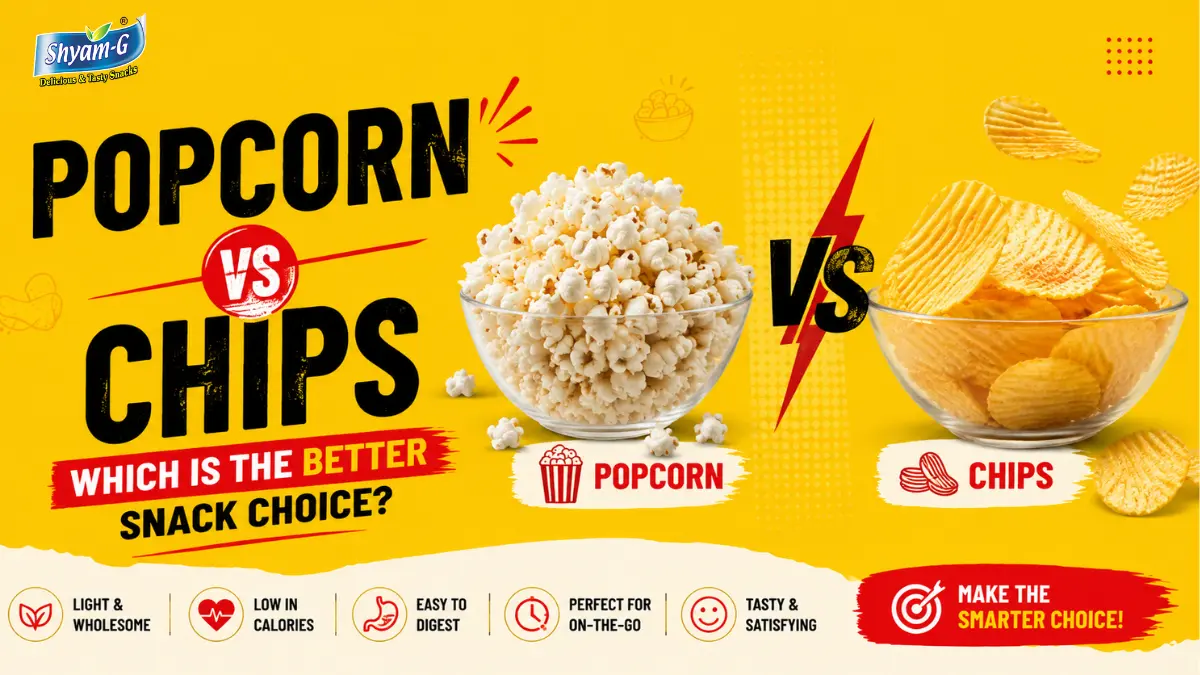
Every Indian household has been in this situation. Someone opens the kitchen cabinet and has to pick between a bag of masala chips and a pack of flavored popcorn india. Both are sitting right there. Both look tempting. And if you think even a little about what you eat, the question of popcorn vs chips which is healthier is one you have probably asked at least once.
The honest answer is not as simple as most articles make it sound. It depends on what type of popcorn, what type of chips, how much you eat, and what you are eating it for. A plain air popped popcorn is very different from a butter caramel popcorn packet. And a baked chip is a completely different product from a deep fried masala chips packet.
This guide goes beyond the basic calorie number and gives you a real, practical answer based on what Indian consumers actually buy and eat every day.
What Goes Into Each Snack: Starting From the Basics
Before comparing health numbers, it helps to understand what each snack actually is made of.
Flavored popcorn india starts as a whole grain corn kernel. When it gets heated, the moisture inside turns to steam and the kernel pops open. In its most basic form, plain popped corn is a whole grain snack with fiber, which is something most Indian packaged snacks india do not offer at all. The issue is that most popcorn packets sold in Indian shops are far from plain. They come coated in butter, salt, sugar, cheese, or masala, and each of these coatings changes the nutrition picture quite a bit.
Potato chips india start as sliced potato, which is a natural vegetable. But deep frying those slices in oil and then coating them in salt and spice blends moves them very far from anything that could be called a vegetable anymore. The result is a high fat, high sodium snack that delivers a very strong flavor hit in a very small serving size.
Both snacks begin as simple, natural ingredients. What happens after that is what separates a reasonably okay snack from one that adds up quickly in fat and calories.
The Calorie and Fat Comparison: Plain vs Flavored
This is where most comparison articles go wrong. They compare the healthiest version of popcorn against the average version of chips, which is not a fair or realistic comparison for most Indian buyers.
Here is what a realistic comparison looks like for packaged snacks india that most people actually pick up from a shop.
Plain air popped popcorn at 30g gives you roughly 110 to 120 calories and about 1 to 2g of fat. This is the healthiest version and the one most health articles use when they say popcorn is better.
A standard packet of flavored popcorn india, like a butter or cheese variety, at the same 30g gives you around 140 to 160 calories and 8 to 10g of fat. That is a completely different picture from plain popcorn.
Regular deep fried potato chips india at 30g gives you around 150 to 160 calories and 8 to 10g of fat. Baked chip varieties come in lower, around 120 to 130 calories and 3 to 5g of fat.
The takeaway is clear. Plain popcorn beats everything else on calories and fat. But the flavored popcorn india you actually find on most most popular packaged snacks in india shelves is nutritionally very similar to regular chips. The health advantage of popcorn only holds if you are choosing the plain or lightly seasoned version.
Fiber: The One Area Where Popcorn Clearly Wins
This is the one real nutritional advantage that popcorn holds over chips in almost every comparison.
Because popcorn starts as a whole grain, it naturally has dietary fiber in it. Even flavored popcorn packets keep some of this fiber, usually around 2 to 4g per 30g serving. Potato chips india, whether plain or masala chips, contain almost no fiber at all because the frying process and the thinness of the slice removes most of what was in the original potato.
Why does fiber matter when snacking? Fiber slows down how quickly you feel hungry again after eating. This is why a handful of popcorn can feel more filling for longer compared to the same weight of chips. Chips tend to give a quick, strong flavor hit that fades fast, which is exactly why it is so easy to keep reaching back into the packet.
For people trying to manage how much they snack overall, the fiber in popcorn is a genuine practical benefit, not just a nutrition label point.
Sodium and Salt: A Problem in Both Categories
If calories and fat are the main concern for most people, sodium is the concern that often gets completely ignored.
Both masala chips and most flavored popcorn packets carry high sodium levels. A single 30g serving of masala chips can have anywhere from 200 to 400mg of sodium depending on the brand and spice level. Flavored popcorn is not much better, with butter and cheese varieties sitting in a similar range.
The real issue with sodium in snacking is that most people eat more than one serving in one sitting. A packet that the label calls two servings often gets finished in one go, which doubles whatever the label says. This is worth keeping in mind the next time you are comparing snack labels at a shop.
The better choices within each category are the ones with lower sodium, which usually means plainer versions. Lightly salted popcorn and plain salted chips both tend to have less sodium compared to their masala and heavily flavored versions.
Popcorn vs Chips as Kids Snacks India: What Every Parent Should Know
This is a section that most comparison articles completely leave out, even though parents are one of the biggest groups asking this question.
Kids snacks india is a growing category precisely because parents are paying more attention to what goes into their children's snack box. Both popcorn and chips show up in school tiffins and afternoon snack bowls across India, so the comparison matters here in a very practical way.
For younger children below the age of 5, whole popcorn kernels in a packet can be a choking risk. This is an important safety point that most snack articles never mention. If you are giving popcorn to a young child, always make sure the variety is fully popped and the pieces are small enough to be safe.
For older kids, lightly salted or mildly flavored popcorn is generally a better tiffin snack compared to masala chips, simply because it is lower in fat and the fiber helps keep them full through the school day. Masala chips are fine as an occasional treat but the high sodium and spice level makes them less ideal as a daily school snack for children.
Low Calorie Snacks India: Which One Actually Qualifies
The phrase low calorie snacks india gets used a lot in snack marketing, but it is worth being clear about what it actually means.
In India, FSSAI guidelines define a food as low calorie if it contains 40 calories or less per 100g. By this standard, most regular popcorn and chip products in the Indian market do not actually qualify as genuinely low calorie, since even plain popcorn comes in at around 375 to 400 calories per 100g.
What popcorn does offer is a lower calorie density when you measure by volume rather than weight. Because popcorn is airy and light, a large bowl of popcorn might weigh only 20 to 25g, which is around 80 to 100 calories. A bowl of chips of the same size would weigh much more and carry significantly more calories.
This volume advantage is real and practical. If you are someone who snacks while watching a film or during a long evening, popcorn lets you eat more by volume for fewer calories, and that can make a real difference over time.
Healthy Snack Option India: How to Pick Smarter Within Each Category
Rather than choosing between popcorn and chips as a whole category, the smarter move is to choose the right version within each one.
For popcorn, the healthier choices are plain, lightly salted, or mildly spiced varieties with very little added butter or sugar. These give you the fiber benefit and the volume advantage without the extra fat and sodium that heavily flavored versions carry.
For chips, baked varieties are significantly better than deep fried ones. Some Indian brands now offer baked chip options that cut the fat content by roughly half compared to regular fried chips, which makes them a much more reasonable choice for regular eating.
As a healthy snack option india, both categories have better and worse versions inside them. The packaging and marketing of a snack does not tell you which version you are holding.
The ingredients list and the nutrition table on the back of the packet tell you much more than the front of the packet ever will.
Brands like Shyam G Snacks take a different approach by focusing on traditional namkeen formats that use familiar Indian ingredients rather than heavily processed additives. For people who want a break from the popcorn versus chips debate altogether, well made namkeen is a satisfying option that fits the Indian palate naturally and does not rely on artificial flavoring to taste good.
Affordable Snacks in India: Which One Gives Better Value
For most Indian consumers, price is a real part of the snacking decision, not just taste and health.
Affordable snacks in india at the Rs. 10 to Rs. 30 price point include both popcorn and chips in single serve or small pack formats. At this price point, chips generally offer a stronger flavor experience per rupee. The seasoning in a Rs. 20 masala chips packet tends to feel more intense and satisfying than a plain Rs. 20 popcorn packet.
However, best popcorn in india options at slightly higher price points, around Rs. 50 to Rs. 100 for a larger pack, often give better volume and a longer snacking experience compared to chips in the same price range. For someone snacking during a two hour film, a larger popcorn pack can feel like significantly better value than a chip packet that runs out in 15 minutes.
The Final Answer: Which One Should You Actually Pick
Here is the clear and honest answer based on everything above.
Pick plain or lightly seasoned popcorn if you want a lower fat snack, need fiber to stay full for longer, are buying for kids, or want something you can snack on slowly over a longer time without eating too many calories too quickly.
Pick chips if you want a strong and bold flavor hit, are snacking at a get together or party, or specifically want that spicy masala chips experience that only a well seasoned chip can give you. Go for baked versions where you can find them to keep the fat content lower.
The healthiest version of either snack is always the least processed version with the fewest added ingredients. That is true for both popcorn and chips, and it is the simplest rule you can follow the next time you are standing in front of a snack shelf trying to decide.
Want to read more honest snack comparisons, flavor breakdowns, and practical Indian snacking guides? Browse our other articles for straightforward information that actually helps you decide.
