

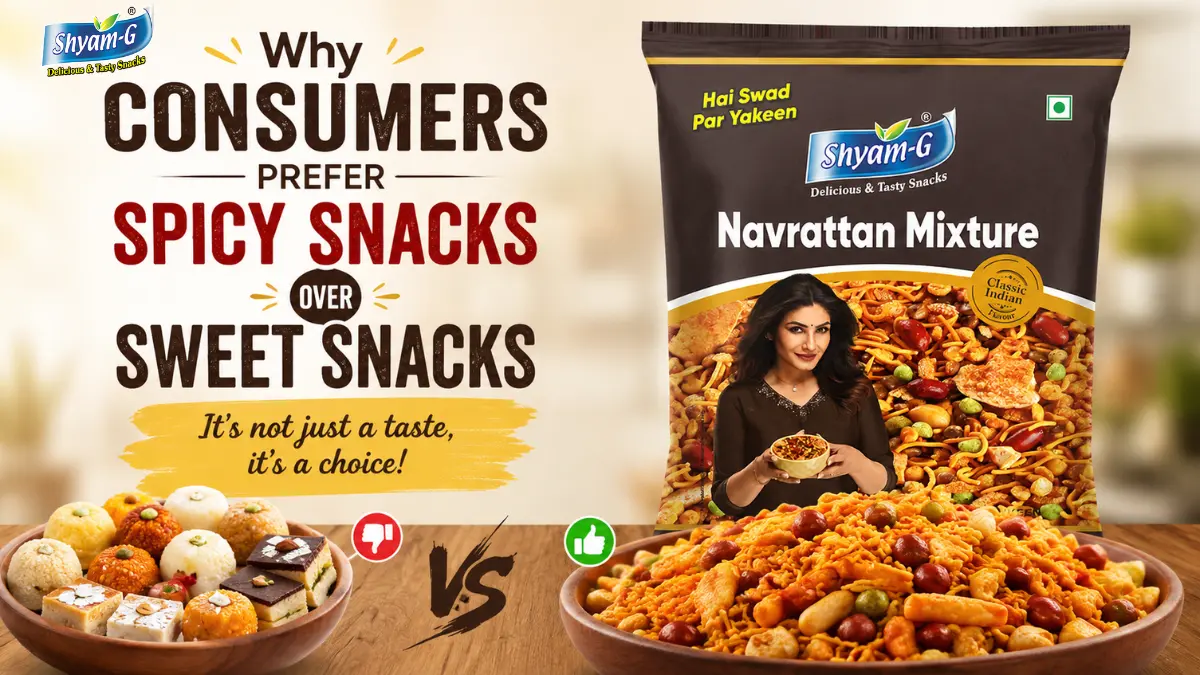
Why Consumers Prefer Spicy Snacks Over Sweet Snacks
Walk into any shop in India and look at the snack shelf. You will notice something quickly. The spicy packets always outnumber the sweet ones. This is not a coincidence. It is one of the clearest patterns in Indian snacking culture.
Spicy snacks in india have become the default choice for most people, whether it is a packet of bhujia, a bag of masala chips, or the newer wave of Korean style chilli snacks. But why does spice win so consistently over sugar when it comes to snacking.
This article looks at the real reasons behind this preference. The taste science, the regional food habits, and the newer trends that are keeping spicy snacks on top.
The Science Behind Why Spice Feels So Good
There is an actual biological reason spicy food creates such a strong pull.
When you eat something spicy, the capsaicin in chili peppers triggers a mild pain response in your mouth. Your brain reacts by releasing endorphins, which create a small rush of pleasure. This is part of why spicy food can feel almost addictive. Your body is rewarding you even while your tongue is burning a little.
This effect explains why people often go back for more spicy namkeen instead of stopping after one handful. The craving is not just about taste, it is also about that brief endorphin lift.
Sweet snacks do not trigger this same reaction. They satisfy a craving quickly, but they rarely create the same repeated pull that spicy snacks do.
Regional Flavors That Built India's Love for Spice
India's spicy snack habit did not appear overnight. It comes from decades of regional cooking traditions that have slowly made their way into packaged snacks.
Punjabi tadka namkeen is one clear example. The tadka style of cooking, where spices are roasted in hot oil to release their full aroma, has influenced an entire category of namkeen that carries that same bold, smoky flavor. This is very different from the simple salted snacks that dominated shelves decades ago.
Other regional influences show up across the country. Rajasthan's love for strong, dry masalas in bhujia and mixtures. Gujarat's tangy and mildly spicy farsan varieties. South India's use of curry leaves and red chili in murukku and mixture. Bengal's spicy puffed rice mixes like jhaal muri.
Each region brought its own version of spice, and packaged snack brands eventually picked up on these flavors to create the wide variety we see today in most popular packaged snacks in india.
Masala Chips and the Rise of Bold Flavor Branding
Chips brands learned early on that mild salted flavors were not going to hold attention for long in the Indian market.
Masala chips became one of the biggest success stories in Indian snacking. The combination of tangy, spicy, and slightly sweet notes hit a flavor profile that felt instantly familiar to Indian taste buds, almost like a quick version of chaat in chip form.
This success pushed brands to keep experimenting. Today you will find chili lime, peri peri, and extra hot variants competing for shelf space, all trying to capture that same craving for spicy chips for snacking india.
The pattern is clear. Once a spicy flavor becomes popular, brands rarely go back to plain. They keep pushing the spice level higher because consumer demand keeps asking for it.
Korean Chilli Chips and the New Wave of Global Spice
In the last few years, a new flavor trend has entered the Indian snacking conversation.
Korean chilli chips india searches have grown rapidly as Korean food culture, partly through dramas and music, has made Indian consumers curious about gochujang and Korean chili flavors. These snacks bring a different kind of heat compared to traditional Indian spice, often combined with a slightly sweet and umami base.
What is interesting is how well this new spice profile is blending with Indian preferences rather than replacing them. Many brands are now experimenting with hybrid flavors that mix Korean style heat with familiar Indian masala notes.
This shows that Indian consumers are not just loyal to traditional spice. They are open to new spicy experiences as long as the heat and flavor balance feels satisfying.
Why Desi Namkeen Still Holds Its Ground
With so many new spicy snack trends entering the market, you might expect traditional namkeen to lose its place. That has not happened.
Desi namkeen snack india options continue to perform well because they offer something new trends cannot fully replace, a deep familiarity. The taste of a well made bhujia or a spicy mixture often connects to childhood memories, festivals, and family gatherings.
Brands like Shyam G Snacks continue to focus on this traditional spicy namkeen space, sticking to recipes that feel authentic rather than chasing every new flavor trend. This kind of consistency is part of why traditional spicy snacks remain a steady favorite even as new options keep appearing.
The Bigger Picture: Why Spicy Wins Over Sweet in India
Putting all of this together, a few clear reasons stand out for why spicy snacks consistently outperform sweet ones in India.
Spice creates a mild pleasure response that keeps people reaching for more. Indian regional food culture has deep roots in bold, spicy flavors. Brands have learned that spicy products sell better and keep experimenting. New global trends are adding variety without replacing traditional spice preferences.
This combination makes packaged snacks india a market where spice will likely continue to dominate for a long time. Sweet snacks still have their place, especially during festivals or specific cravings, but for everyday snacking, spice remains the clear favorite.
If you enjoy exploring why we snack the way we do, take a look at our other guides on Indian snacking culture and flavor trends. There is always more to discover about the food choices we make every day.
