
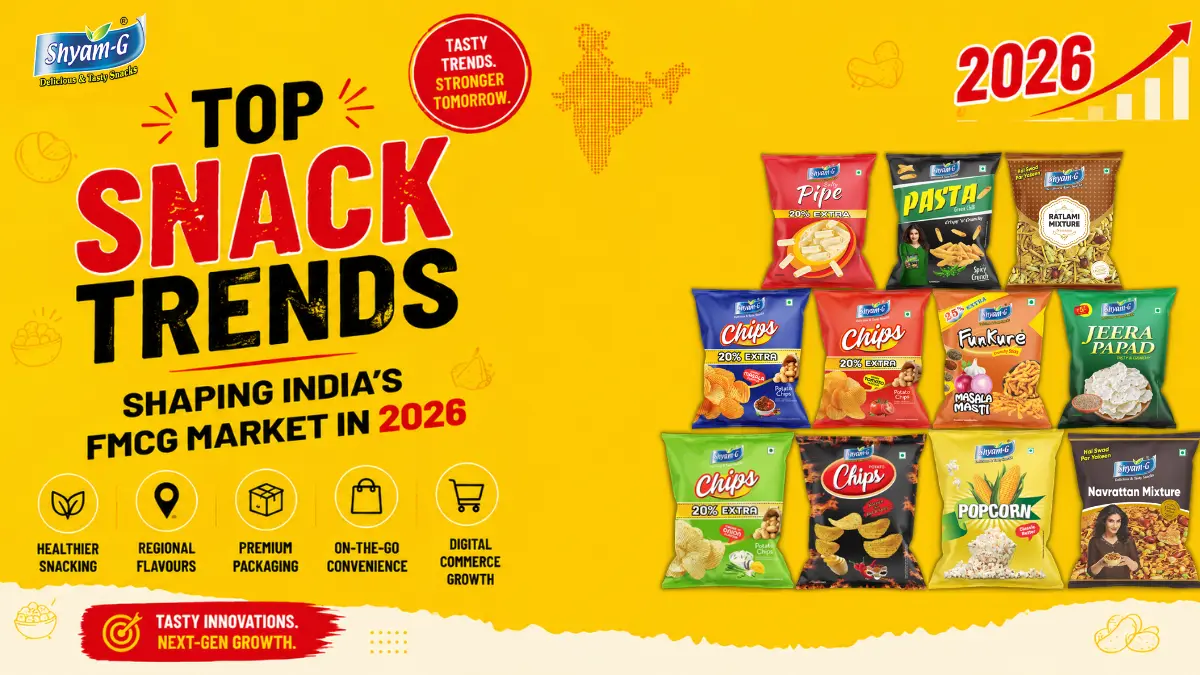
Top Snack Trends Shaping India's FMCG Market in 2026
The Indian snack market does not sit still for long. Every year, something shifts. A new flavor catches on, a new format takes off, or a new type of buyer changes what sells. In 2026, several of these shifts are happening at the same time, and they are changing what packaged snacks india looks like on shelves, in warehouses, and in online carts.
This is not just interesting for consumers. For distributors, retailers, and snack brands, understanding these trends early is the difference between stocking the right products and being stuck with the wrong ones.
This article covers the most important snack trends shaping the Indian FMCG market right now, with real context on why each trend is happening and what it means for the people working in this industry.
The Rise of Healthy Snacking as a Real Purchase Driver
A few years ago, healthy snacking in India was more of a talking point than an actual buying habit. That has changed quite a bit.
More Indian consumers, especially in cities, are now reading labels before buying. They check oil content, look for trans fats, and compare ingredient lists in a way that was not common even three years ago. This shift has made healthy snacks company in india a real and growing category rather than a small niche.
Baked snacks, makhana, roasted nuts, and multigrain options are all seeing more demand. The interesting part is that this healthy trend is not replacing traditional snacks like namkeen and chips. It is sitting right alongside them. People are buying both, healthier options for weekday snacking and more indulgent options for weekends and family gatherings.
For distributors and retailers, this means stocking a mix of both categories rather than dropping one for the other.
Korean and Global Flavors Are Not Going Away
Korean chilli chips india searches have grown steadily, and this is not just a social media moment that will fade.
What started as curiosity driven by Korean dramas and music has turned into a real flavor preference. The sweet and spicy taste, the umami base, and the kind of heat that feels different from regular Indian chili have all found a genuine audience in India, especially among people between the ages of 18 and 30.
What is more interesting is how Indian brands are responding. Instead of simply importing Korean products, many are creating hybrid flavors that mix Korean style heat with familiar
Indian masala. This approach works well because it gives consumers something new without making the flavor feel too different or unfamiliar.
This is part of a bigger pattern where Indian consumers are becoming open to global flavors as long as the spice and taste balance still feels right to an Indian palate.
Kids Snacks India Is Becoming Its Own Category
This is one of the most underreported trends in the indian snack industry trends conversation right now.
Kids snacks india has quietly grown into a separate category with its own shelf space, its own packaging needs, and its own buying logic. Parents are no longer just giving children smaller portions of adult snacks. They are actively looking for products made specifically for kids, with lower spice levels, cleaner ingredients, and portion sizes that fit a school tiffin box without any waste.
Brands that understood this early have built strong repeat purchase loyalty. A parent who trusts a snack brand for their child does not switch easily, which makes this one of the stickiest customer groups in the entire snack market.
For snacks brands in india looking for a clear growth area in 2026, the kids category is one of the most straightforward opportunities. It is still underpenetrated compared to the adult snack segment, and the buying frequency is high since parents restock tiffin supplies every week.
Quick Commerce Is Changing How Snacks Get Discovered
This is the trend that is quietly reshaping the entire fmcg snack market india 2026 in ways that are still playing out.
Quick commerce snacks india, meaning snacks ordered through 10 to 30 minute delivery apps, has changed how consumers find and try new snack products. On a physical store shelf, big established brands with strong distribution naturally dominate. On a quick commerce app, a smaller brand can appear right next to a large national player, and the purchase decision comes down to price, packaging, and reviews rather than brand history or shelf placement.
This is genuinely good news for emerging snack brands india 2026 that have strong product quality but limited traditional distribution reach. Quick commerce gives them a path to getting tried by new customers without needing to win shelf space in hundreds of stores first.
For any fmcg distributor india partner, this shift also changes the conversation. Brands now need both traditional retail distribution and quick commerce visibility to reach their full customer base. These two channels often need different pack sizes, different pricing, and faster replenishment speeds.
Regional Snack Brands Are Gaining Ground
One of the quieter but more meaningful shifts in packaged food trends india is the rise of regional snack brands.
For a long time, national brands dominated organized retail because they had the distribution muscle and marketing budgets to match. But consumer preferences are shifting toward something more authentic, and regional snack brands carry something that a large national company often cannot copy easily. A genuine local flavor identity that feels real rather than manufactured.
A brand from Rajasthan making authentic Bikaneri bhujia, or a Gujarat based company with deep roots in farsan tradition, carries a credibility with regional consumers that a centralized national brand simply does not have. Consumers from those regions can tell the difference, and they remember it.
Brands like Shyam G Snacks represent this kind of regional honesty, staying focused on traditional North Indian namkeen recipes that connect with consumers who know exactly what that flavor should taste like.
Affordable Snacks Are Still the Foundation of the Market
While premium and healthy snacking gets most of the attention in trend reports, the real volume of the Indian snack market is still driven by affordable snacks in india at the Rs. 5 to Rs. 30 price point.
This part of the market is not shrinking. It is actually getting more competitive as more brands recognize that price accessibility is still the single biggest purchase driver for most Indian consumers, especially in smaller cities and rural areas.
For most popular packaged snacks in india at this price point, consistent quality and strong distribution still matter more than trends, premium positioning, or new flavor launches.
What This All Means for the Indian Snack Market
Putting everything together, 2026 is shaping up to be a year where the Indian snack market moves in several directions at the same time rather than following just one dominant trend.
Health and indulgence are coexisting rather than competing. Global and regional flavors are both growing. Quick commerce is opening new doors for smaller brands. The affordable segment is holding firm as the market foundation. And kids snacks are quietly becoming a category worth serious attention.
For anyone working in the indian fmcg brand or snack distribution space, the practical point is straightforward. Flexibility in product mix matters more now than betting everything on a single trend.
If you work in snack distribution, retail, or brand building and want to understand more about where the Indian snack market is heading, browse our other industry guides for practical and clear analysis without unnecessary complexity.
