
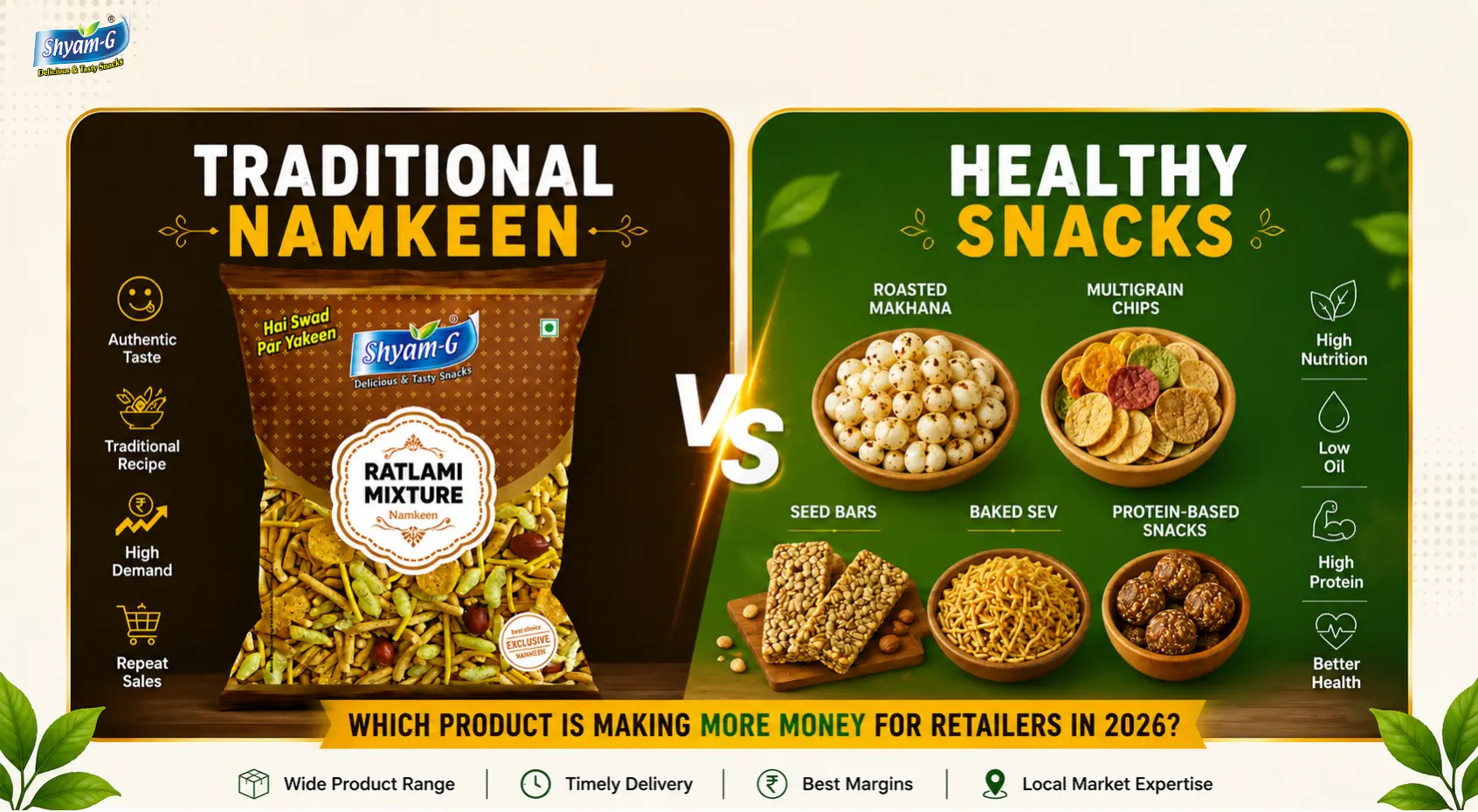
Traditional Namkeen vs. Healthy Snacks: Which Product is Making More Money for Retailers in 2026?
Walk into any kirana store or general store in your town today and you will see two very different sections sitting next to each other. One side has the old familiar packets of traditional Indian namkeen, the bhujia, the moong dal, the mixture that your family has been buying for years. The other side has newer looking packets with words like multigrain, baked, protein, and zero oil printed in big letters.
Both sections are growing. But which one is actually making more money for the retailer? That is the real question.
This article looks at both categories honestly, using what is actually happening in the Indian snack market in 2026, and helps retailers understand where to focus their shelf space and buying budget for the best returns.
What the 2026 Market Is Telling Us About Packaged Snacks India
Before we compare the two, it helps to understand the overall picture. The most popular packaged snacks in India market is growing at a strong pace right now. The India namkeen market growth report by Technavio confirms the market is valued to grow by around USD 4.89 billion between 2025 and 2030.
At the same time, media reports suggest that average household spending on healthy eating is going to increase significantly by 2026, which will naturally push up consumption of healthy snacks as well. Research And Markets
So both categories are growing. The question is not which one is dying. The question is which one gives a retailer more reliable daily sales and better profit right now in 2026.
Traditional Indian Namkeen: Still the King of Daily Sales
Let us start with the category that has been around the longest. Traditional Indian namkeen is not just a food product. It is a habit. People buy it with their morning chai. They buy it during cricket matches. They buy it at festivals. They buy it as a quick evening snack without even thinking about it.
Namkeen remains the biggest contributor in the ethnic snacks segment of India. The nature of growth is changing from volumeled and price driven to branded packaging, premium versions, and increased geographical reach. Ken Research
For a kirana retailer, this is very good news. It means traditional Indian namkeen is not slowing down. It is actually getting more organised and more profitable as more customers shift from loose unbranded namkeen to properly packed branded products.
What makes traditional namkeen so strong for retailers:
The purchase cycle is very short. A customer who finishes a packet today will buy again in two or three days. It sells across all age groups, from children to senior citizens. It works in every season, summer, winter, monsoon, festival time. North India especially favours traditional foods like mathris and namkeens strongly, which means retailers in this region have a very loyal and consistent buyer base. The best namkeen in India brands like bhujia and aloo bhujia carry strong emotional connection with buyers that no new healthy snack brand has yet built at that scale.
Namkeen profit margin india for retailers generally sits between 12 to 20 percent depending on the brand and pack size, which is a solid margin for a fast moving product.
Healthy Snacks: Growing Fast but Concentrated in Cities
Now let us look at the other side. The healthy snack market india 2026 is real and it is growing. Growing numbers of millennials and Gen Z consumers are driving demand for healthy snacks with high nutrition options, According to healthy snacking trends in India research, this demand is currently more concentrated around Tier 1 and Tier 2 cities
Products like roasted makhana, multigrain chips, seed bars, baked sev, and protein based snacks are finding buyers among urban and semi urban customers who are becoming more conscious about what they eat.
In 2024, nearly 150 million health conscious consumers were actively seeking low fat, baked, or roasted snack options, especially in urban regions, pushing snack manufacturers to innovate and introduce more health centric products.
For a retailer in a big city or a growing town with young working professionals, stocking a healthy snacks company in india range makes a lot of sense. These products often carry a higher price point per packet, which can mean a better rupee value per sale even if the volume is lower.
However, there are some real challenges that retailers face with healthy snacks:
The price point is higher, which means fewer customers will buy on impulse. Shelf life can be shorter for some natural ingredient products. Brand loyalty is still being built, and customers switch between healthy snack brands frequently. Awareness and trial still need push in smaller towns and rural markets.
Traditional Snacks vs Healthy Snacks India: A Practical Comparison for Retailers
Here is a simple side by side comparison that any retailer can use to think through their stocking decisions. Always check that healthy snack products on your shelf carry proper FSSAI food labelling guidelines compliance details before stocking them.
- Daily Sales Volume: Traditional Indian namkeen wins clearly. Customers buy it every day across all demographics.
- Profit Margin per Packet: Healthy snacks often carry a higher margin per packet because of their premium price positioning. However, the lower volume can balance this out.
- Customer Age Group: Namkeen sells to everyone. Healthy snacks sell mainly to customers between 18 and 40 years old who are fitness or diet conscious.
- Town vs City: In Tier 2 and Tier 3 towns and rural areas, traditional snacks vs healthy snacks india comparison is almost no contest. Traditional namkeen dominates completely. In metros and bigger cities, healthy snacks are gaining ground fast.
- Repeat Purchase Rate: Traditional namkeen is bought again and again without the customer thinking too much. Healthy snacks are sometimes bought as a trial purchase or during specific diet periods.
- Shelf Stability: Most good branded traditional namkeen has a solid shelf life of several months, making it easy for retailers to manage stock without worrying about wastage
Which Snack Sells More India: The Honest Answer for 2026.
If you are running a shop in a small town, semi urban area, or even a large residential neighbourhood in North India, traditional Indian namkeen is almost certainly making you more money right now in 2026. The volume, the repeat purchase frequency, and the strong cultural habit around it all make it the safer and more consistent revenue generator.
Traditional products dominate, while modern extruded snacks and potato chips continue to expand strongly alongside them. Healthy snacks are carving their own space but they have not yet replaced the everyday buying habit that namkeen represents. Vocal Media.
If you are running a shop near offices, gyms, colleges, or in a premium urban neighbourhood, adding a healthy snacks company in india range to your shelf makes good business sense. These customers actively look for better options and are willing to pay more per packet.
The smartest move for most retailers in 2026 is not to choose one over the other. It is to stock both but in the right proportion for your specific location.
How a Good Indian Snacks Brand Can Help You Balance Both Categories
Some snack companies have understood this shift early and are building product ranges that appeal to both the traditional buyer and the slightly more health conscious customer.
A brand like Shyam-G Snacks has been building its presence across North India with a strong range of desi namkeen snack india products that carry the authentic taste profile customers in Haryana and Punjab have always loved.
Working with a focused indian snacks brand that understands your regional market means you get products that your local customers already want, with the supply consistency and margin structure that keeps your snack section profitable.
What Retailers Should Do Right Now in 2026
Based on everything we know about the current market, here is a practical approach for any retailer:
Give 60 to 70 percent of your snack shelf to traditional Indian namkeen and classic packaged snacks. These are your daily revenue drivers and they will not disappoint. Use the remaining 30 to 40 percent for newer healthy or premium snack options that attract younger buyers and customers looking for something different. Keep your spicy namkeen and aloo bhujia sections always stocked since these are among the fastest moving products in North India.
Try two or three healthy snack brands in small quantities first before committing to large stock orders, since this category still has higher brand switching among buyers. Price your healthy snack packets clearly since customers in this category are very price conscious and will not buy if they cannot see the cost quickly.
Wrapping Up
The debate between traditional Indian namkeen and healthy snacks is not really a competition. Both have their place and both are growing in India right now. But for most retailers, especially those in North India, traditional namkeen is still the backbone of daily snack sales and the most reliable source of consistent revenue.
Healthy snacks are a smart addon for the right location and the right customer base. The retailer who understands their own customer mix and stocks accordingly will always come out ahead.
Stock smart, stay updated, and keep watching what your regular customers are actually picking up from your shelf. That shelf behaviour tells you more than any market report ever will.
If you want to explore more practical tips on growing your snack retail business or learn how to partner with the right snack brand for your region, read our related guide below.
