

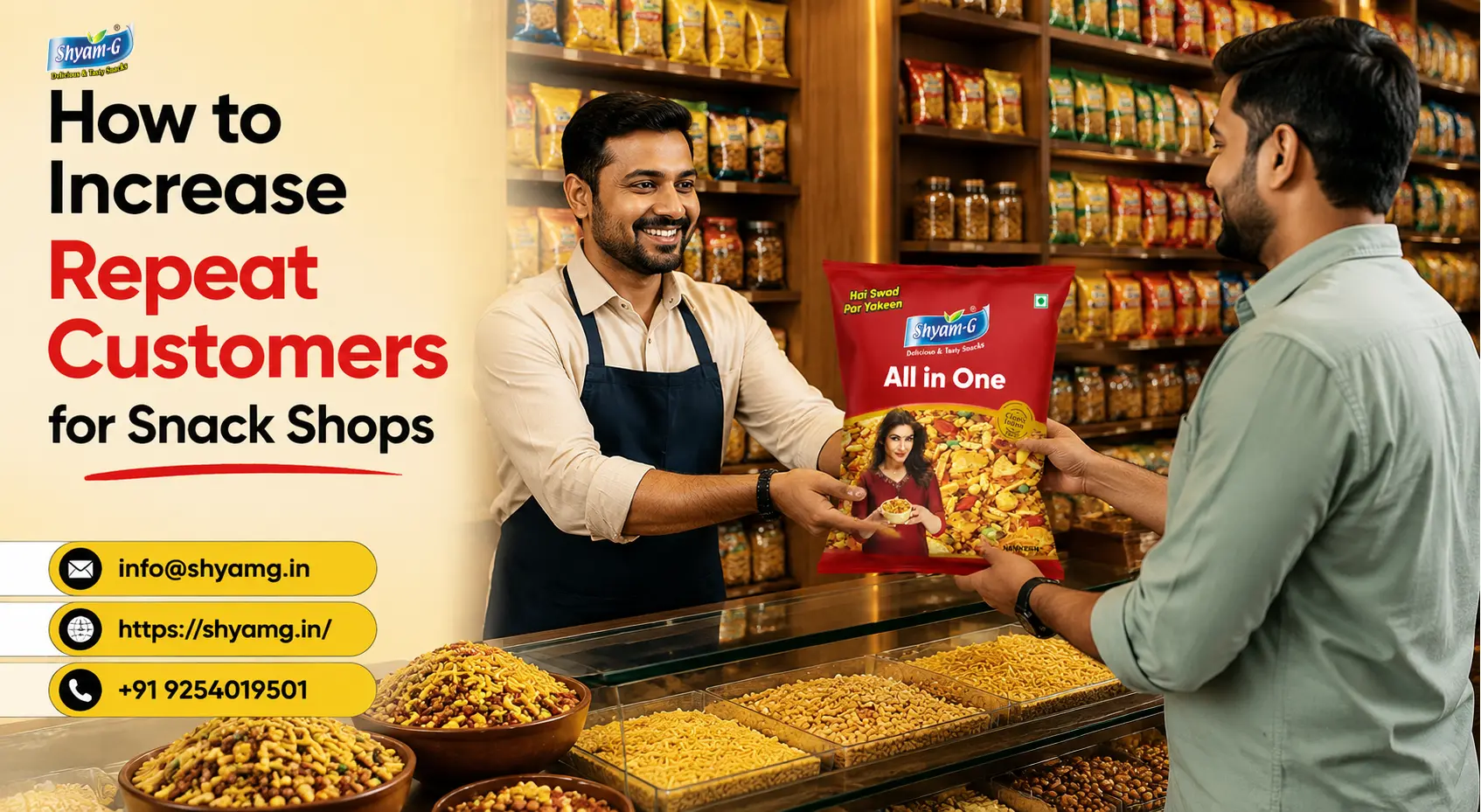
How to Increase Repeat Customers for Snack Shops
Running a snack shop is not only about getting new customers. The bigger challenge is giving people a good enough reason to come back. A customer who buys a packet of namkeen once is useful, but a customer who returns every week can become an important part of your regular sales.
For retailers selling packaged snacks india, repeat purchases often depend on simple things. Customers want their favourite products to be available, they want snacks to be fresh, and they expect fair prices. A clean shop, easy product selection, helpful service, and a good range of snacks can also make a strong difference.
Many shop owners think discounts are the easiest way to bring customers back. Discounts can help sometimes, but they are not the complete answer. If the product quality is poor or the customer's favourite snack is always out of stock, a discount will not solve the problem.
The better approach is to understand why customers choose your shop and what could make their next visit easier. This means looking at your products, stock, display, pricing, service, and customer feedback together.
In this guide, we will explain practical ways to increase repeat customers for snack shops in India. We will also look at product selection, freshness, pack sizes, supplier relationships, loyalty ideas, common mistakes, and a simple action plan that small retailers can follow.
Why Repeat Customers Matter for Snack Shops
A new customer has to discover your shop first. A repeat customer already knows where you are, what you sell, and what kind of experience they can expect. If their previous purchase was good, they have less reason to try another shop.
This makes repeat customers valuable for small snack retailers. Regular buyers can help create steady demand and can also give you useful information about what people in your area actually want to eat.
For example, if the same customers regularly buy a particular namkeen, chips flavour, popcorn, or small snack pack, that buying pattern tells you something important. You know there is real demand for that product in your market.
This information can help you plan your stock better. Instead of filling your shelves with too many products, you can give more space to the items that customers already buy.
Repeat customers can also recommend your shop to family members, neighbours, friends, and other people in the local area. For a small retailer, this kind of word of mouth can be more useful than constantly trying to attract completely new buyers.
Keep Popular Snacks Available
One of the simplest ways to lose a regular customer is to keep their favourite snack out of stock. Imagine a customer visits your shop every weekend for the same namkeen. If they cannot find it several times, they may start buying from another shop.
This is why stock availability should be one of the first things a retailer checks. You do not need to keep every snack in large quantities. Instead, identify the products that sell regularly and make sure they receive proper attention when you place your next order.
Start by checking your weekly sales. Look at which products move quickly and which products remain on the shelf for a long time. Your regular sellers may include namkeen, chips, popcorn, fryums, mixtures, small packs, and family packs.
You can also understand wider market demand by reading your existing guide on popular packaged snacks in India. This can help you notice broader snack preferences while your own sales data tells you what works specifically for your customers.
The important point is to balance market trends with local demand. A product may be popular across India, but that does not automatically mean it will become a strong seller in your area.
Make Freshness a Regular Priority
Freshness is another major part of the customer experience. People buy snacks because they expect good taste, texture, and quality. If a customer repeatedly receives products that are not in good condition, their trust in the shop can slowly reduce.
Retailers should therefore check their stock regularly. Look at the condition of packets, storage areas, best before information, damaged products, and shelf cleanliness. Products should also be stored according to the requirements given by the manufacturer and applicable food safety rules.
Namkeen needs particular care because storage conditions can affect its taste and texture. Heat, moisture, poor handling, or unsuitable storage can affect the product before it reaches the customer.
Your existing article on how to keep namkeen fresh for longer can also be used as a helpful internal resource for readers who want more information about freshness and storage.
A customer may not tell you every time that a product was fresh. But when the quality stays consistent, they remember the experience. That consistency can become one of the reasons they choose your shop again.
Understand What Your Local Customers Want
Every snack shop has its own type of customer. A shop near a school may have strong demand for smaller affordable packs. A shop in a residential area may sell more family packs. A shop near offices may see higher snack purchases during certain parts of the day.
This is why there is no single product list that works perfectly for every retailer.
The easiest way to understand your market is to talk to your customers. You can ask simple questions while serving them. Ask which snack they buy most often, which flavour they want, which pack size they prefer, or whether there is any product they have been unable to find at your shop.
These conversations do not need to feel like formal market research. They can happen naturally during regular shopping.
Suppose several customers ask for the same product. Instead of immediately buying a large quantity, test a small stock first. If it sells well, you can increase your next order.
This approach helps you make buying decisions based on real customer behaviour rather than assumptions.
Keep Traditional Snacks Along With New Options
Customers often return to familiar products because they already know the taste and quality. This is one reason traditional indian namkeen continues to have an important place in snack buying.
At the same time, customers also like trying something different. New flavours, new snack formats, and changing product preferences can create curiosity.
A smart snack shop can keep a balance between both.
Keep your regular traditional products available while testing a few new options in smaller quantities. If customers like a new product and sales remain healthy, you can make it part of your regular range.
Your existing article on top trending snack flavors in India can also support this section through internal linking.
The key is not to chase every trend. A new flavour may get attention online, but the real test is whether customers in your shop actually buy it again.
H2: Offer Pack Sizes That Match Customer Needs
Different customers buy snacks for different reasons. Someone picking up a snack for immediate eating may prefer a small pack, while someone shopping for the family may want a larger pack.
Keeping a useful mix of pack sizes can therefore make your product range more convenient.
Small packs can also help customers try a new product without spending much. If they like it, they may later choose a larger pack.
Your existing article on small snack packs can be linked here because it gives readers more information about why smaller snack packs can work well in the Indian retail market.
The right pack size depends on your location, customer group, product price, and buying pattern. Watch what sells instead of assuming that every customer wants the same quantity.
Make Your Snack Shop Easy to Browse
A customer should be able to understand your product range without too much effort. If packets are mixed together or popular products are hidden behind other items, customers may simply choose whatever they can see first.
A clean and organised display can make shopping easier. Keep similar products together and give your popular products a visible position. New products can have a separate area so customers can notice them without disturbing the main product range.
You do not need to spend a lot of money on shop decoration. Good organisation can often make a bigger difference.
For more ideas, you can internally link to your existing article on retail display ideas for snacks.
A good display should help customers make decisions. It should not simply make the shop look full.
Keep Hygiene and Product Handling in Focus
Food safety and cleanliness are closely connected with customer trust. A shop may have excellent products, but poor cleanliness can create a negative impression.
Retailers should keep counters and shelves clean, store products properly, remove damaged packets from sale, and handle food products carefully. These are basic practices, but customers notice them.
FSSAI currently provides food safety resources for food businesses, including information related to hygiene and food safety practices. Its Hygiene Rating Scheme is designed to encourage food businesses to improve hygiene standards and help consumers make informed choices.
Retailers should follow the food safety and licensing requirements that apply to their specific business.
For a repeat customer, cleanliness is not usually the reason they first enter a shop. But it can become one of the reasons they feel comfortable returning.
Why Cleanliness Supports Customer Trust
Customers want confidence in the food they buy. Clean shelves, proper storage, careful handling, and good product condition all contribute to that confidence.
This becomes even more important when a shop wants to build long term relationships with local customers.
The Indian food sector is also seeing continued regulatory attention around food quality, labelling, and hygiene in 2026, which makes proper food handling and compliance even more relevant for food businesses.
Choose a Reliable Snack Supplier
Your relationship with customers is also connected to your supplier. If products arrive late, damaged, or in poor condition, your shop may face empty shelves or unhappy customers. This can directly affect the buying experience.
When selecting a namkeen wholesale supplier, do not compare suppliers only on purchase price. Look at product quality, delivery consistency, packaging, product range, pack sizes, stock availability, and the support you receive when there is a problem.
A reliable supplier should make your daily retail work easier. If your best selling products are available when customers need them, you have a better chance of keeping those customers with your shop.
You can also guide readers to your existing article on how to work with a snacks supplier for more practical information about supplier relationships.
Focus on Consistent Product Quality
Customers come back when they know what they can expect. If someone likes a particular namkeen or snack today, they will expect a similar experience when they buy it again.
This is why retailers should be careful while selecting brands and suppliers. A dependable namkeen manufacturer should maintain suitable production practices, proper packaging, clear product information, and consistent product quality.
Price is also important, but it should not be the only factor. A product with a slightly higher purchase price may still be a better choice if customers buy it regularly and the product gives you reliable sales.
When comparing suppliers, look at the complete picture. Product quality, shelf life, packaging, supply consistency, customer support, and product demand should all be considered before making a regular buying decision.
Give Customers Enough Choice Without Overloading Your Shop
Customers like having choices, but too much choice can also create a problem for retailers. If you keep every new snack that comes into the market, your money can get stuck in slow moving stock.
A better approach is to create a balanced range. Keep the products that customers already buy, add a few products that are gaining attention, and test new options in small quantities.
This approach is especially useful in 2026 because snack preferences continue to change. Recent industry reporting shows stronger interest in areas such as protein rich snacks, cleaner labels, and products that combine convenience with perceived health benefits.
For a local shop, however, a national trend should only be treated as a starting point. The final decision should come from your own customers and sales.
Use Customer Feedback Before Changing Your Product Range
Your regular customers can tell you what your shop is missing.
A simple question at the counter can sometimes give you more useful information than a large amount of guesswork. Ask customers which flavour they want, which pack size they prefer, or which snack they usually buy from another shop.
If the same request comes from several customers, test it.
Do not immediately purchase a large quantity. Start with a small order and check how quickly it moves. If customers buy it again, you have a stronger reason to continue stocking it.
This also helps you avoid filling your shelves with products that look interesting but do not have enough local demand.
Give Regular Customers Simple Rewards
A loyalty programme does not have to mean a mobile application or an expensive system.
For a small snack shop, simple rewards can be easier to manage. You could offer a small benefit after regular purchases, a selected family pack offer, or an opportunity to try a new product at a suitable price.
The reward should be easy to understand.
Customers should know what they need to do and what they will receive. Complicated rules can make a simple offer feel like extra work.
Also, avoid giving discounts on every product. A loyalty offer should encourage repeat buying while still allowing your shop to maintain a healthy margin.
Do Not Depend Only on Discounts
Discounts can bring attention, but they are not a complete repeat customer strategy.
If a customer visits only because your price is lower, they may move to another shop when someone else offers a lower price. This can make your business dependent on constant discounting.
Instead, give customers several reasons to return.
Keep their favourite products available. Maintain freshness. Keep the shop clean. Make the products easy to find. Offer fair prices and helpful service.
When these things work together, customers have a reason to choose your shop even when there is no special offer running.
Make the Shopping Experience Simple
A snack shop does not need to look expensive to feel good.
Customers mainly want to find what they need without wasting time. Products should be visible, shelves should be organised, and popular items should not be hidden behind unrelated products.
Keep similar categories together where practical. You can place chips, namkeen, popcorn, and other snack products in sections that are easy to understand.
Your existing guide on retail display ideas for snacks can be used here as a natural internal link for readers who want more display ideas.
The goal is simple. Make it easy for customers to see, compare, and choose.
Build Trust Through Cleanliness and Food Safety
A clean shop creates a better impression, especially when customers are buying food products regularly.
Keep the counter and shelves clean. Store products properly. Check damaged packets and keep the storage area suitable for the products you sell.
FSSAI currently provides food safety resources for food businesses, and its Food Safety Display Board guidance states that FSSAI registration or licence information must be displayed at food premises, with Food Safety Display Boards being introduced in a phased manner.
FSSAI also lists retailers and petty retailers of snacks and tea shops among food business categories within its current FoSCoS system.
Retailers should always follow the food safety and licensing requirements applicable to their particular business.
Learn From Your Slow Moving Products
Repeat customer strategy is not only about finding what sells.
You should also understand what does not sell.
If a product remains on the shelf for a long time, ask why. Is the price too high? Is the flavour not suitable for your customers? Is the product placed where people cannot see it? Is the pack size wrong?
Sometimes the problem is not the product itself.
A small change in display or price may improve movement. In other cases, the product may simply not match local demand.
Reviewing slow moving stock regularly can help you use your shelf space and buying budget more effectively.
Use Local Taste to Build a Stronger Snack Range
Indian snack preferences can vary greatly from one market to another. A product that works well in one city may not perform in the same way somewhere else.
This gives local retailers an advantage.
You are close to your customers. You can see what they buy, what they ask for, and what they recommend to others.
Keep familiar products that already have demand, then slowly test new options.
Local and regional brands can also be useful when their taste and price match your market. Your existing article on why local snacks brands are growing faster can provide additional context.
For a retailer, the main question should always be simple.
Will my customers buy this product again?
How Shyam G Snacks Can Fit Into a Retail Snack Range
A retailer needs products that match customer demand, price expectations, product quality, and shelf requirements.
Shyam G Snacks can be considered as part of a wider snack range when its products fit the needs of your local market and customer base.
The focus should remain on choosing products that customers enjoy and are willing to buy repeatedly. A retailer should review product quality, pack sizes, availability, pricing, and sales movement before deciding which products deserve regular shelf space.
This is the same approach you should use with any fmcg snacks company india or snack supplier. The brand name matters, but customer response matters more.
Common Mistakes That Stop Customers From Returning
Keeping Popular Products Out of Stock
When customers repeatedly find their favourite products unavailable, they may start visiting another shop. Keep a closer watch on your regular sellers and plan orders around actual sales.
Buying Too Much New Stock
New products can be useful, but buying too much at the beginning can block your working capital. Test small quantities first and increase the order only after seeing customer response.
Ignoring Product Freshness
A customer may forgive one small problem, but repeated poor product condition can reduce trust. Check stock regularly and follow suitable storage practices.
Using Discounts for Every Customer
Constant discounts can reduce margins without creating real loyalty. Give customers a reason to return because of your complete shopping experience, not only because of a lower price.
Ignoring Customer Requests
If customers repeatedly ask for a particular product or pack size, that feedback deserves attention. Test the request and check whether there is enough demand to keep it regularly.
A Simple 30 Day Plan to Increase Repeat Customer
Week One
Start by checking your sales. Identify your strongest products, slow moving products, and products that are frequently out of stock.
At the same time, check your shelves, storage area, product condition, and overall shop presentation. You do not need to change everything. Focus on the areas that customers see and use most often.
Week Two
Talk to your regular customers.
Ask what they like, what they want to see, and which products they normally buy elsewhere. Write these requests down instead of depending only on memory.
Then choose two or three realistic products to test.
Week Three
Improve your product display and test the new products in small quantities. You can also introduce one simple loyalty offer for regular customers.
Do not change too many things at once. If you make several changes together, it becomes harder to understand which change actually helped sales.
Week Four
Review the results.
Look at which products sold, which products remained on the shelf, and what customers said about the changes. Keep the ideas that worked and remove the ones that did not.
This creates a simple monthly system that can help you improve your shop based on real customer behaviour.
Final Thoughts
Increasing repeat customers does not require a complicated marketing plan.
It starts with the basics.
Keep popular snacks available. Maintain good product condition. Understand local taste. Offer useful pack sizes. Keep your shelves organised. Listen to customers. Work with dependable suppliers and avoid buying large quantities of products without testing demand.
The Indian snack market continues to see new products and changing consumer preferences, so retailers have plenty of opportunities to improve their product mix. At the same time, local demand should remain the main guide for day to day stock decisions.
For retailers selling packaged snacks india, the strongest repeat customer strategy is often the simplest one. Give people a good product, make it easy to buy, keep it available, and make sure the experience stays consistent.
When customers know they can depend on your shop, returning becomes a natural choice.
Give Your Customers a Reason to Come Back
Your next repeat customer may not need another big discount. They may simply want their favourite namkeen to be available, fresh, properly packed, and reasonably priced every time they visit.
Start by checking your best selling products. Then review your stock, product display, pack sizes, supplier support, and customer feedback. These small improvements can help you build a snack range that matches what your local customers actually want.
If you are a retailer, distributor, or snack business owner looking for products to add to your range, explore Shyam G Snacks and review the available snack options for your market.
Build the right range. Keep it fresh. Keep it available. Give customers a reason to choose your shop again.
You can also explore our guides on increasing snack sales in local markets, working with a snacks supplier, and choosing a namkeen wholesale supplier for more practical retail guidance.
