

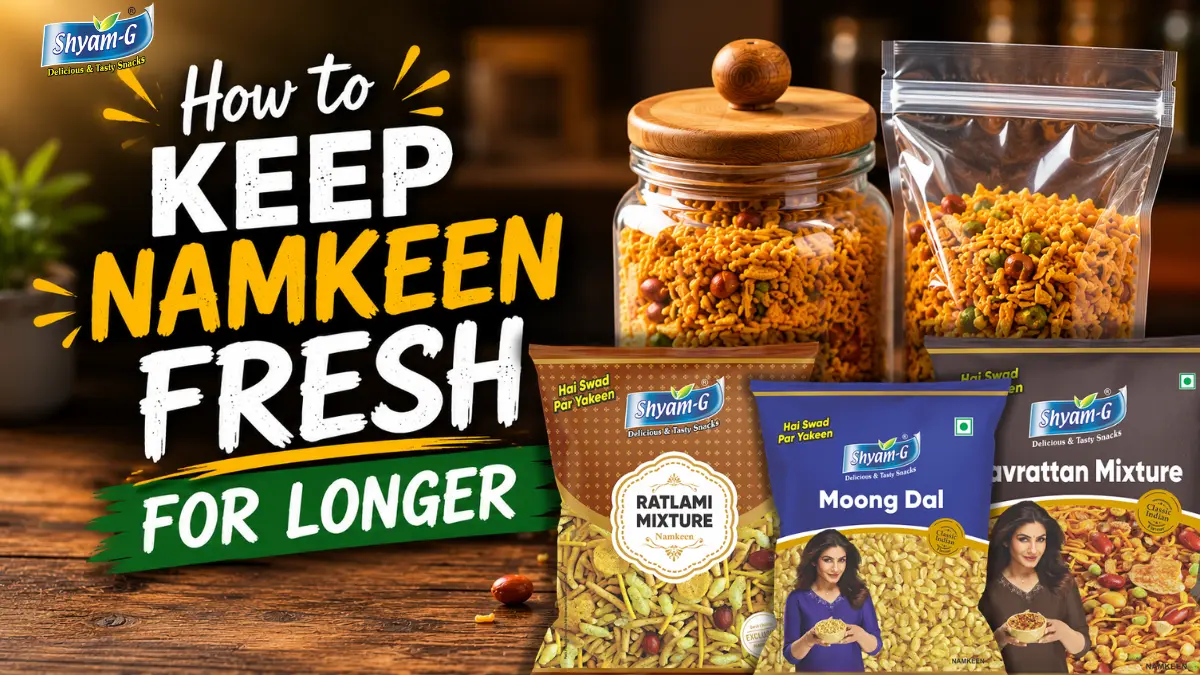
How to Keep Namkeen Fresh for Longer at Home and in Stores
There is nothing quite like settling down with a hot cup of chai and reaching for your favorite namkeen only to find it has gone soft and stale. Whether it is a packet of spicy namkeen, a jar of aloo bhujia, or a festive tin of navratan mixture namkeen, losing that satisfying crunch to humidity or poor storage is genuinely disappointing.
India's climate makes this challenge real. High humidity, fluctuating temperatures, and improper storage quietly destroy what was once a perfectly crisp snack. The good news? Keeping namkeen fresh is not complicated it just requires understanding what causes staleness and taking a few smart steps to prevent it.
This guide covers practical storage tips for home kitchens, actionable advice for kirana store owners and retailers, and insights into why packaging quality matters more than most people realize.
Why Does Namkeen Go Stale? The Science in Simple Terms
Before fixing the problem, it helps to understand it.
Most traditional indian namkeen varieties are deep fried, which leaves a thin layer of surface oil on every piece. When this oil comes in contact with oxygen, it begins to break down a process called lipid oxidation creating that unpleasant rancid or metallic taste you sometimes notice in older snacks.
At the same time, moisture from the surrounding air softens the starches. This is why your moong dal namkeen loses its crunch on a rainy monsoon afternoon, even if the packet was barely open.
Two enemies. One solution: cut off their access.
According to food safety guidelines published by the Food Safety and Standards Authority of India (FSSAI), maintaining stable storage conditions controlled temperature, low humidity, and minimal light exposure significantly slows chemical spoilage in fried foods.
How to Keep Namkeen Fresh at Home
Choose the Right Container
This is where most households go wrong. Thin plastic boxes are breathable they allow moisture and air to slowly seep in, no matter how tightly you close the lid.
Better options:
- Heavy glass jars with rubber sealed lids
- Stainless steel dabbas with tight fitting covers a classic Indian kitchen staple that genuinely works
- Ceramic containers for smaller quantities
Avoid storing khatta meetha namkeen packet contents in the original pouch once opened. Transfer immediately into an airtight container.
Location Matters More Than You Think
Where you keep your snack jar is just as important as what you keep it in.
- Away from the stove: heat accelerates oil breakdown
- Away from windows: UV light degrades both flavor and texture
- Inside a dark cupboard or pantry: cool, dark, and dry is the ideal environment
A simple rule: if your kitchen feels warm and bright, your namkeen jar should be somewhere that does not.
The Two Jar Method
Every time you open your main storage jar, fresh air rushes in. Over time, this repeated exposure adds up.
The solution is simple:
- Keep a large sealed master jar for your main stock
- Fill a small daily use jar with 2–3 days worth of snacks
- Only open the master jar when refilling the small one
This small habit makes a noticeable difference, especially for lighter snacks like sev or bhujia that absorb moisture quickly.
Rescue Stale Namkeen Before You Throw It Away
If your snacks have already gone soft, do not discard them yet. Two quick fixes work surprisingly well:
- Dry roast in a heavy kadhai on low flame for 2–3 minutes, then cool completely before storing
- Microwave on a paper towel for 20–30 seconds on high, let it cool the crunch usually comes back
These methods work temporarily. For long term freshness, proper storage from day one is the only real answer.
Keeping Packaged Snacks India Fresh : Advice for Retailers and Store Owners
For kirana stores, sweet shops, and grocery retailers, stale inventory is not just a quality problem it directly hits your margin and your reputation.
Protect Stock from Sunlight and Heat
Glass front display counters look attractive but create a greenhouse effect inside packaging. Direct sunlight raises internal temperature rapidly, causing oil separation and early rancidity even in factory sealed packets.
Practical fix: Position display racks away from windows and direct light sources. Use opaque storage bins for bulk stock kept behind the counter.
Follow FIFO Always
First In, First Out is a non negotiable rule for any food retail business. Always rotate stock so older packets are sold before newer stock is opened. This one habit alone prevents most wastage related losses.
Storage Conditions for Different Namkeen Types
Not all namkeen behaves the same way. Here is a quick reference:
