
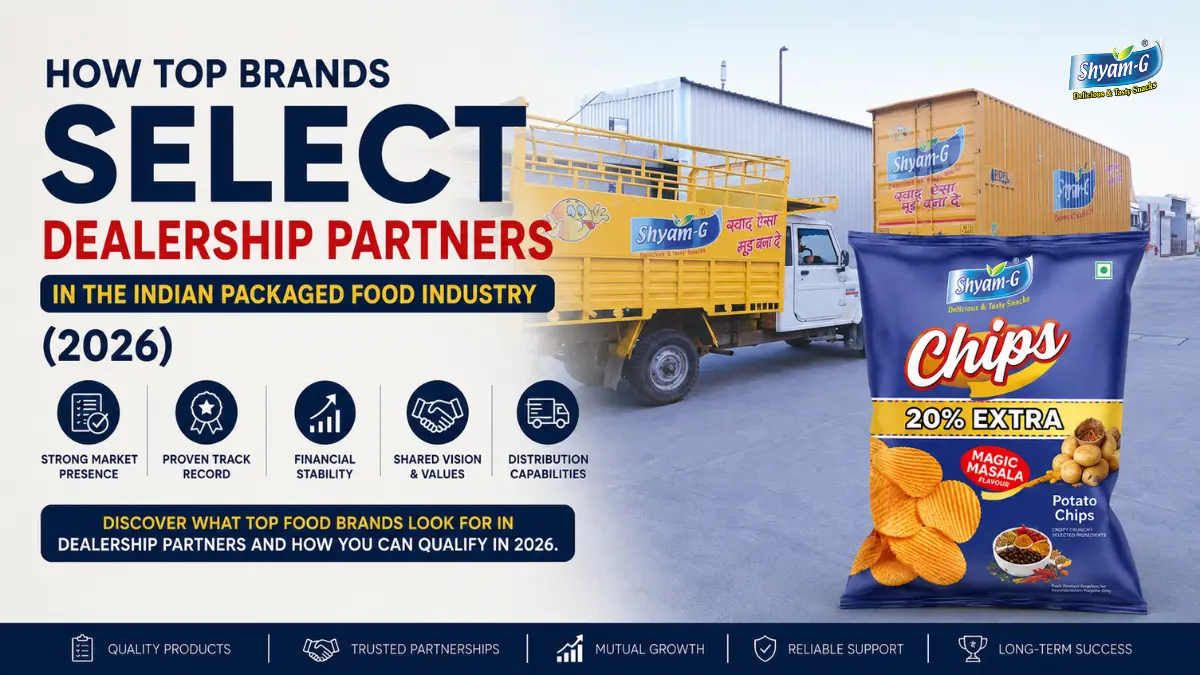
How Top Brands Select Dealership Partners in the Indian Packaged Food Industry
The Indian packaged food market is growing every year, and so is the demand for reliable distribution partners. Because of this, many entrepreneurs are applying for a snacks dealership india opportunity with well known food brands. While some applications move forward quickly, many never receive approval. The difference is rarely about investment alone.
Today, every fmcg snacks company india wants distributors who can help build a strong and sustainable market presence. They look for people who understand local retailers, manage stock properly, maintain good business relationships, and have the ability to grow sales over time. A dealership is not just about buying products. It is about becoming a trusted business partner.
If you are planning to apply for a dealership with one of the top snacks manufacturers in india, this guide will help you understand how companies make their decisions. You will also learn what businesses expect from new partners, which documents are required, common mistakes applicants make, and practical ways to improve your chances of approval. Instead of guessing what brands want, you will see the process from their point of view. That gives you a much better chance of building a successful dealership business.
Why Getting a Snacks Dealership Is More Competitive Than Before
The Indian snack industry has changed a lot over the last few years. Consumers now buy more packaged snacks india from supermarkets, kirana stores, quick commerce platforms, and online grocery apps than ever before. This growth has encouraged manufacturers to expand into new cities and towns.
According to the Indian Brand Equity Foundation (IBEF), India's FMCG sector continues to grow because of rising incomes, urbanisation, and increasing demand for branded food products. As brands expand, they need reliable distribution partners who can reach retailers efficiently. This has created new business opportunities, but it has also increased competition.
A growing snacks manufacturing company india may receive dozens of dealership enquiries every month. Large national brands often receive hundreds. Since companies have many options, they can choose applicants who are best prepared to represent their brand.
Today, businesses look beyond investment capacity. They want partners who understand the market, can maintain product availability, build retailer trust, and grow the assigned territory consistently. That is why preparing before you apply is just as important as having the required budget.
What Modern FMCG Brands Expect From a Dealership Partner
Many first time applicants believe approval depends only on investment. That is no longer true. An experienced snacks distribution company india evaluates several factors before appointing a distributor.
These include:
- Knowledge of the local retail market
- Existing relationships with retailers and wholesalers
- Financial stability
- Storage and delivery infrastructure
- GST and food safety compliance
- Ability to achieve long term sales growth
- Commitment to serving the complete assigned territory
Companies invest years in building their reputation. They want dealership partners who will protect that reputation while expanding their market reach. This is why even applicants with a smaller investment may receive approval if they demonstrate strong business planning and market understanding.
What Top Brands Really Look for in a Dealership Partner
Getting approved for a snacks dealership india is not only about submitting an application. Every brand wants a partner who can help expand its business in a sustainable way. Before appointing a distributor, companies usually evaluate several areas to understand whether the applicant is ready for long term growth. If you know what brands expect before you apply, you can prepare better and improve your chances of approval.
Strong Knowledge of the Local Market
The first thing many companies assess is your understanding of the market where you want to operate. A distributor who knows the area well can identify high demand locations, understand customer buying habits, and build stronger retailer relationships. This local knowledge helps brands enter new markets with less risk.
During discussions, companies may ask questions such as:
- Which retail areas generate the highest snack sales
- How many grocery stores are active in your territory
- Which products sell faster during festive seasons
- Who are the major competitors already serving the market
A distributor who answers these questions confidently creates a positive first impression. For any fmcg snacks company india, local knowledge is often more valuable than simply having a large warehouse.
Existing Relationships With Retailers
Retailers are the backbone of every FMCG distribution network. If you already have good relationships with kirana stores, supermarkets, wholesalers, or local distributors, you become a much stronger candidate. Companies know that building retailer trust takes time. An applicant with an existing network can usually start generating sales much faster than someone starting from zero. Instead of saying, "I know many retailers." Explain your network with practical details.
For example,
- Number of retailers you already work with
- Markets you regularly visit
- Experience handling FMCG products
- Existing supply routes
Specific information builds confidence.
Financial Readiness Beyond Initial Investment
Investment is necessary, but companies also want to know whether your business can operate smoothly after the first stock purchase. Many first time distributors focus only on arranging the initial investment. They forget about working capital needed for daily operations.
A professional distributor plans for:
- Inventory management
- Delivery expenses
- Staff salaries
- Retailer credit periods
- Vehicle maintenance
- Unexpected business costs
When brands review dealership applications, they often prefer applicants who have a realistic financial plan instead of simply quoting a large investment amount.
Proper Storage and Distribution Infrastructure
Food products require proper handling. Whether you work with chips, namkeen, extruded snacks, or other traditional indian namkeen, companies expect distributors to maintain clean and organised storage facilities.
A basic dealership setup should include:
- Clean storage space
- Dry environment with proper ventilation
- Easy loading and unloading access
- Safe stock arrangement
- Delivery vehicle or transport arrangement
- Basic inventory tracking system
Many businesses conduct a site visit before final approval. Having your warehouse ready before applying shows professionalism and reduces onboarding time.
Business Compliance and Documentation
Every organised snacks manufacturing company india follows legal and food safety standards. Before appointing a distributor, companies generally verify whether the applicant has completed the required business registrations.
The most common requirements include:
- GST Registration
- FSSAI Licence
- Business Registration
- PAN Card
- Current Bank Account
- Address Proof
- Warehouse Details
Keeping these documents ready before applying can speed up the approval process and shows that you are prepared to operate professionally.
Ability to Cover the Assigned Territory
One common reason dealership partnerships fail is poor market coverage. Some distributors focus only on busy markets while ignoring smaller towns and villages. Brands do not want this. They expect distributors to serve the complete territory assigned to them.
A good coverage plan should explain:
- Areas you will cover first
- Number of retailers you plan to visit every week
- Delivery schedule
- Sales team structure
- Future expansion plan
This demonstrates that you are thinking beyond the first order.
Long Term Business Mindset
Most brands are not looking for someone who wants to make quick profits. They want business partners who are willing to grow together. An experienced snacks distributor india regularly collects retailer feedback, monitors product movement, solves supply issues quickly, and works closely with the company's sales team. These qualities build trust over time. Companies are much more likely to continue supporting distributors who focus on long term market development instead of short term sales.
How Companies Evaluate Dealership Applications
Applicants who perform well across all these areas usually receive faster responses than those who only highlight their investment capacity.
Expert Perspective
Many entrepreneurs believe that large investments automatically secure dealership approval. Real industry experience tells a different story. Companies often choose applicants who demonstrate preparation, consistency, and market understanding over those who simply promise higher investments. For example, an applicant with a well organised warehouse, existing retailer relationships, and a clear market expansion plan may receive preference over someone with a bigger budget but little operational readiness. This approach reduces business risk for both the company and the distributor.
How the Dealership Selection Process Actually Works
Many people think that dealership approval happens after filling out an enquiry form. In reality, every fmcg snacks company india follows a structured evaluation process to reduce business risk and choose the right distribution partner. While the exact process may differ from one company to another, most top snacks manufacturers in india follow these five stages.
Stage 1: Initial Enquiry
Everything starts with your first enquiry. This could be through the company's website, email, phone call, or dealership application form. At this stage, companies usually collect basic information such as:
- Business location
- Investment range
- Previous distribution experience
- Warehouse availability
- Contact details
Many applicants make the mistake of submitting incomplete information. A detailed application immediately creates a better impression.
Stage 2: Preliminary Business Discussion
Once your application is shortlisted, a company representative usually contacts you. The purpose of this discussion is not to sell the dealership. It is to understand whether your business is suitable for the market.
Some common questions include:
- Which areas do you currently serve
- Do you already supply FMCG products
- How many retailers are connected with your business
- What is your expected investment
- Why do you want to work with this brand
Companies also evaluate how clearly you communicate your business plans. Being honest and practical is always better than making unrealistic promises.
Stage 3: Verification and Market Assessment
Before approving a distributor, many companies verify the information shared during the discussion. Depending on the company, this may include:
- Warehouse inspection
- Market visit
- Retailer feedback
- Verification of business documents
- Financial capability assessment
Some businesses may also analyse the market potential of the proposed territory before finalising the dealership. For a snacks distributor india, this stage is an opportunity to demonstrate professionalism and readiness.
Stage 4: Commercial Discussion
If the verification is successful, the company shares the dealership terms. These usually include:
- Territory allocation
- Product categories
- Initial order value
- Credit policy
- Distributor margin
- Payment terms
- Sales expectations
- Return and replacement policy
Read every clause carefully before signing the agreement. A transparent company will always explain its policies and answer your questions.
Stage 5: Onboarding and Business Launch
After both parties agree to the commercial terms, the onboarding process begins. This usually includes:
- Product training
- Sales planning
- Distributor orientation
- Marketing support
- Initial stock supply
- Order management process
The first few months are very important because they help establish relationships with retailers and create consistent product availability in the market.
National Brand or Regional Brand Which One Should You Choose
Many new entrepreneurs focus only on well known national brands. That is understandable. Established brands already have strong customer demand and higher brand recognition. However, they are also much more competitive. Regional companies often provide opportunities that first time distributors overlook. The right choice depends on your business goals.
A growing best snacks manufacturing brand in india at the regional level may offer better long term growth if you are entering the business for the first time. Many successful distributors started with regional brands before expanding their portfolio.
Common Reasons Dealership Applications Get Rejected
Companies rarely reject applications without a reason. In most cases, the same problems appear again and again. Understanding these issues helps you avoid them before applying.
- Incomplete Documentation: Missing GST registration, FSSAI licence, or business documents immediately delays the process. Companies prefer applicants who have completed their legal requirements before approaching them.
- Weak Market Knowledge: Some applicants know very little about the area where they want to operate. If you cannot explain your local market, retailers, or competition, companies may question your ability to develop the territory.
- No Retail Network: A dealership business depends on retailer relationships. Applicants who already know shop owners and wholesalers often receive more attention than those starting completely from scratch.
Unrealistic Investment Claims: Quoting a very high investment without proper planning creates doubts. Companies usually prefer realistic financial planning over exaggerated promises. - Poor Infrastructure: An unorganised warehouse or lack of transportation can become a concern. A trusted snack company india wants distributors who can protect product quality throughout the supply chain.
- Limited Territory Planning: Some applicants simply write that they will cover an entire district. Companies expect much more detail.
A practical territory plan should explain:
- Areas to be covered
- Weekly retailer visits
- Delivery schedule
- Expansion targets
Specific planning builds confidence.
Practical Tips to Improve Your Approval Chances
Before applying for a dealership, spend some time preparing your business. Small improvements can make a significant difference.
- Learn Your Local Market: Know which products sell well, who your competitors are, and where the highest retail demand exists.
- Build Retail Connections: Even a network of fifty active retailers can become a valuable advantage during discussions.
- Keep Documents Ready: Complete your registrations before contacting the company. Prepared applicants usually move through the process faster.
- Organise Your Warehouse: A clean and well managed storage facility reflects professionalism. This is especially important when working with traditional indian namkeen and other packaged food products.
- Present a Business Plan: Explain how you plan to grow sales during the first year. Mention expected market coverage, retailer visits, delivery arrangements, and future expansion. Companies appreciate distributors who think long term.
Final Thoughts
Getting approval for a snacks dealership india is not about luck or personal connections. Brands carefully evaluate every application because they are choosing business partners who will represent their products in the market for many years. Before appointing a distributor, companies usually look at market knowledge, retailer relationships, financial planning, infrastructure, documentation, and long term business commitment. Investment is only one part of the decision.
If you prepare your business before applying, your chances of approval improve significantly. Take time to understand your local market. Build relationships with retailers. Keep your documents ready. Create a practical business plan instead of making unrealistic promises. Whether you choose a national company or a growing regional manufacturer, success depends on consistency, professionalism, and your willingness to develop the market over time. Businesses that focus on creating value for retailers usually build stronger partnerships with manufacturers and achieve sustainable growth.
