

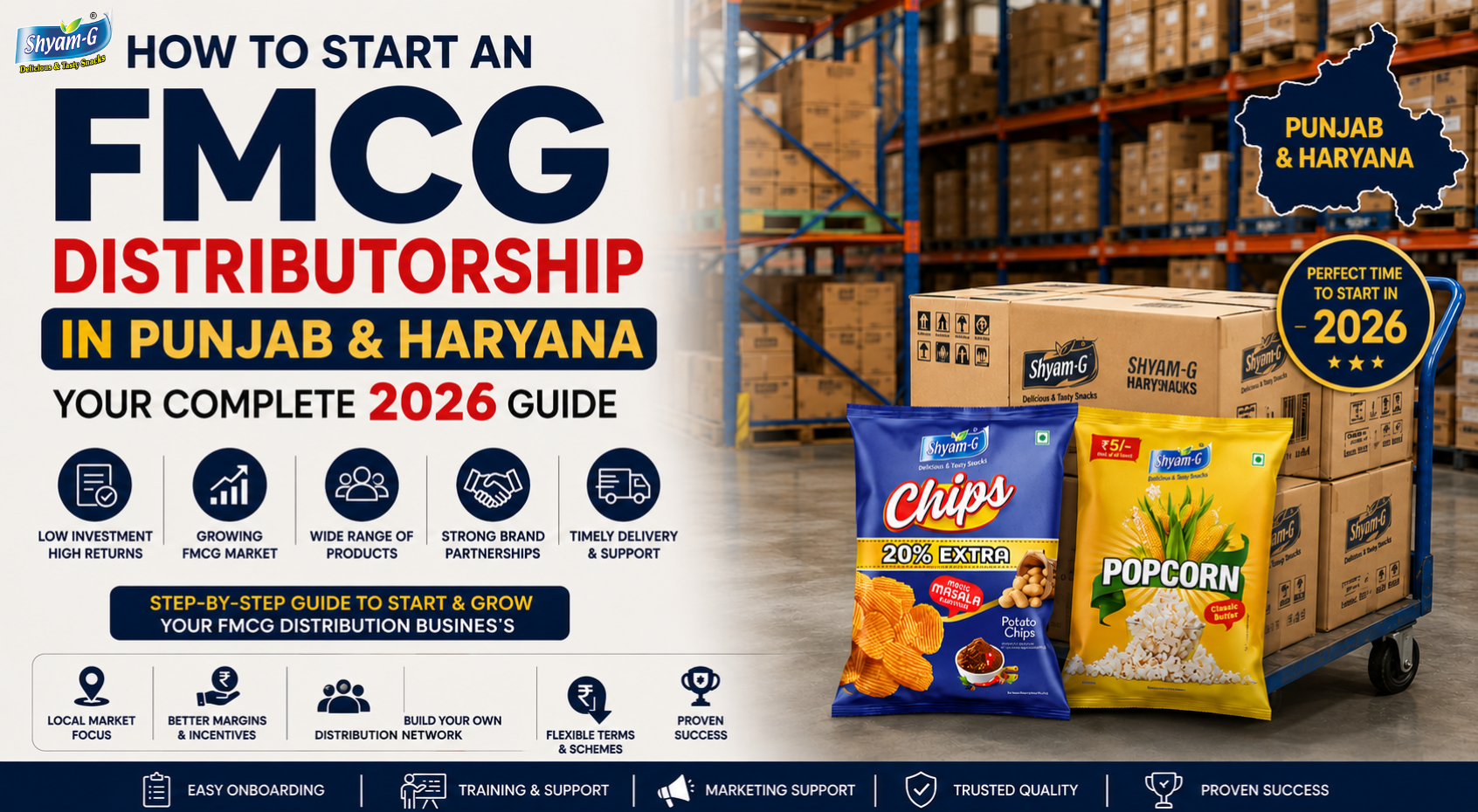
How to Start an FMCG Distributorship in Punjab and Haryana: Your Complete 2026 Guide
Punjab and Haryana are two of the most active consumer markets in North India. People here spend well on food, snacks, and daily household goods. The demand is consistent. The retail network is dense. And the distribution opportunity is real for anyone who is ready to put in the work.If you have been thinking about becoming an fmcg distributor punjab haryana, this is a genuinely good time to explore it.
The snack and namkeen category alone is growing at a strong pace in both states, driven by urbanisation, rising incomes, and a deeply rooted snacking culture. But where do you actually start? What licenses do you need? How much money should you keep ready? And how do you choose the right brand to work with? This guide answers all of that in simple, clear steps. No jargon. No unnecessary complexity. Just a practical roadmap you can actually follow.
Why Punjab and Haryana Are Strong Markets for FMCG Distribution
Before we get into the how, it helps to understand why these two states are worth focusing on. Punjab has a strong purchasing power culture. People here are not shy about spending on good food. The urban markets in Ludhiana, Amritsar, Jalandhar, and Patiala have well developed retail networks with a healthy mix of kirana stores, modern trade outlets, and wholesale markets. Haryana on the other hand has seen massive growth in its Tier 2 and Tier 3 towns over the last decade. Cities like Panipat, Rohtak, Hisar, and Karnal have growing consumer bases that are still underserved by many organised FMCG brands.
This gap is exactly where a smart new distributor can find opportunity. According to IBEF, the Indian FMCG sector continues to grow strongly with rural and semi urban consumption playing a bigger role each year. Both Punjab and Haryana sit right in this growth corridor. The snack category is particularly strong here. Traditional namkeen, chips, and packaged snacks have everyday demand across all age groups and income levels in both states.
1. Decide Your Product Category and Brand
The first real decision you need to make is what category you want to distribute and which brand you want to work with. For new distributors in Punjab and Haryana, the snacks and namkeen category is one of the most practical starting points. Here is why. Fast purchase cycle means cash comes back quickly. Low per unit price means more customers buy every day. Strong regional taste preference for spicy and savory snacks means demand is consistent. And multiple snacks manufacturers in punjab and namkeen manufacturer in haryana already operate in this region, giving you access to brands that understand local taste.
When choosing a brand, look at three things:
Whether their product range actually sells in your target area. What margin and credit terms they offer to new distributors. Whether they have existing retailer demand in your area so you are not starting from zero awareness. A growing regional brand like Shyam G Snacks is a good example of what to look for. They operate with a strong North Indian product range and have been building their distribution network across Haryana and Punjab, which means there is already some retailer familiarity to build on.
2. Understand the Investment Required
This is the question everyone asks first. How much money do I actually need? The honest answer is that it depends on the brand, the area size, and your existing setup. But here is a realistic breakdown of where the money goes for a typical fmcg distribution business punjab or Haryana startup.
- Initial Stock Purchase: Most brands require a minimum first order to onboard a new distributor. For a regional snack brand, this can range from a couple of lakhs to several lakhs depending on the product range and area size. National brands typically require higher initial stock commitments.
- Storage or Godown Setup: You need a proper storage space. If you already own a space, this cost is lower. If you need to rent, godown rental in Tier 2 Punjab or Haryana cities typically runs from Rs 5,000 to Rs 20,000 per month depending on size and location. Basic shelving, pallets, and storage equipment add another smaller amount on top.
- Delivery Vehicle: A small delivery vehicle is essential. A second hand tempo or small truck can cost anywhere from Rs 2 lakh to Rs 5 lakh depending on condition and capacity. Some distributors start by hiring a vehicle on a contract basis to reduce upfront cost.
- Working Capital Buffer: You will need cash in hand for day to day operations. Retailers often take 7 to 15 days to pay. Keeping a buffer equal to roughly one to two months of operating costs is a practical starting point.
- Rough Total Range: For a well planned snacks distributorship in a midsized city in Punjab or Haryana, a starting budget of Rs 5 lakh to Rs 15 lakh covers most first time setups reasonably. Larger national brand distributorships may require more.
3. Get Your Documents and Licenses in Order
This is the part most new distributors skip or delay, and it causes problems later. Get your paperwork sorted before you start supplying anyone. Here is the full document checklist for starting a snacks dealership haryana or snacks dealership punjab legally.
- GST Registration: Any business with a turnover above the threshold limit must be GST registered. For a distributor, this is practically mandatory from day one since all your invoicing will involve GST. You can register on the government portal.
- FSSAI License: Since you will be handling and distributing food products, you need a valid FSSAI license. The type of license depends on your turnover. Most small to medium distributors start with an FSSAI State License or a Basic Registration.
- Business Registration: Register your business as a sole proprietorship, partnership, or private limited company depending on your plans. For a first time distributor, sole proprietorship is the simplest and quickest to set up.
- Current Bank Account: A dedicated business current account keeps your finances clean and makes tax compliance much simpler.
- Distributorship Agreement: This is a written contract between you and the brand or manufacturer. A proper distributorship agreement india covers your assigned territory, minimum purchase commitments, margin structure, payment terms, and return policy. Always read this carefully and get any unclear points clarified before signing.
4. Set Up Your Storage and Delivery System
Once your documents are in place and your brand partnership is confirmed, the next step is getting your operations ready.
- Godown Setup: Your storage space should be clean, dry, and well ventilated. Snack products are sensitive to moisture and heat. Proper shelving keeps products off the floor and organises your stock by brand, SKU, and expiry date for easy management.
- Delivery Route Planning: Plan your delivery routes before you start. Group retailers by area and assign specific delivery days for each zone. This saves fuel, reduces time, and makes your supply schedule predictable for retailers, which builds trust quickly.
- Stock Tracking: Even a simple spreadsheet tracking what came in, what went out, and what is near expiry will save you from losses. As you grow, you can move to basic distribution management software.
5: Build Your Retailer Network
This is where the real work begins. Getting your first set of retailers on board requires legwork, patience, and consistency. Start with the area you know best. Introduce yourself to kirana store owners, show them your product range, explain your delivery schedule, and offer a small trial supply. Do not push for a large first order. A small trial that goes well converts into a long term buyer faster than a large order that overwhelms a new retailer.
For bulk snacks supply punjab and Haryana markets, consistency is the most important thing you can offer. Retailers do not switch distributors because of price alone. They switch because of reliability. If you show up on time every week with fresh stock, you will build a loyal retailer base that sustains your business for years.
How Punjab and Haryana Markets Differ Know Your Ground
This is something most generic guides skip entirely.
Punjab Market Reality
Urban Punjab has well established distribution networks already. Competition from existing distributors is higher in cities like Ludhiana and Amritsar. Your entry strategy should focus on underserved pockets, smaller towns, or product categories where existing distributors are not performing well. Best snack company punjab partnerships work well here if the brand already has some consumer pull. The taste preference in Punjab leans toward spicy, bold flavours. Bulk snacks supply punjab that features strong masala profiles tends to move faster here compared to mild or health oriented options.
Haryana Market Reality
Haryana has more open territory for new distributors, especially in Tier 2 and Tier 3 towns. Snacks distribution company haryana setups in cities like Hisar, Rohtak, and Sirsa face less competition and have more room for a new player to build a network. The North Haryana belt, including areas near Ambala and Kurukshetra, also connects well with Punjab markets, which is an advantage if you plan to eventually cover both states. Namkeen wholesale supplier haryana businesses have traditionally served smaller towns through informal networks. Coming in with a proper invoiced, GST compliant supply chain is itself a differentiator in many of these markets.
Common Mistakes New Distributors Make
Learning from others' mistakes saves you money and time. Here are the ones that come up most often. Taking on too large an area too soon. Start small, build depth in your first zone, then expand. Ignoring near expiry stock management. Snack products have shelf lives. Track expiry dates religiously and rotate your stock accordingly. Not having a written distributorship agreement. A handshake deal leaves you unprotected. Always get terms on paper. Skipping retailer follow-up. Dropping stock and disappearing is not a relationship. Regular check ins build loyalty. Choosing a brand purely on margin without checking local demand. A high margin product that nobody in your area wants is worse than a lower margin product that sells daily.
Wrapping Up
Starting an fmcg distributor punjab haryana business is a real and achievable goal if you plan it properly. Pick the right category. Choose a brand that matches your market. Get your licenses in order. Build your retailer network with consistency and patience. The snack and namkeen category gives you a strong starting point because the demand is daily and the purchase cycle is fast. Whether you are starting in a mid sized Punjab city or exploring an underserved Haryana town, the opportunity is there for someone who shows up reliably and builds relationships the right way. If you want to explore snack brand distribution opportunities in Punjab or Haryana, or learn more about what a distributorship partnership looks like, check out the related guide below.
