

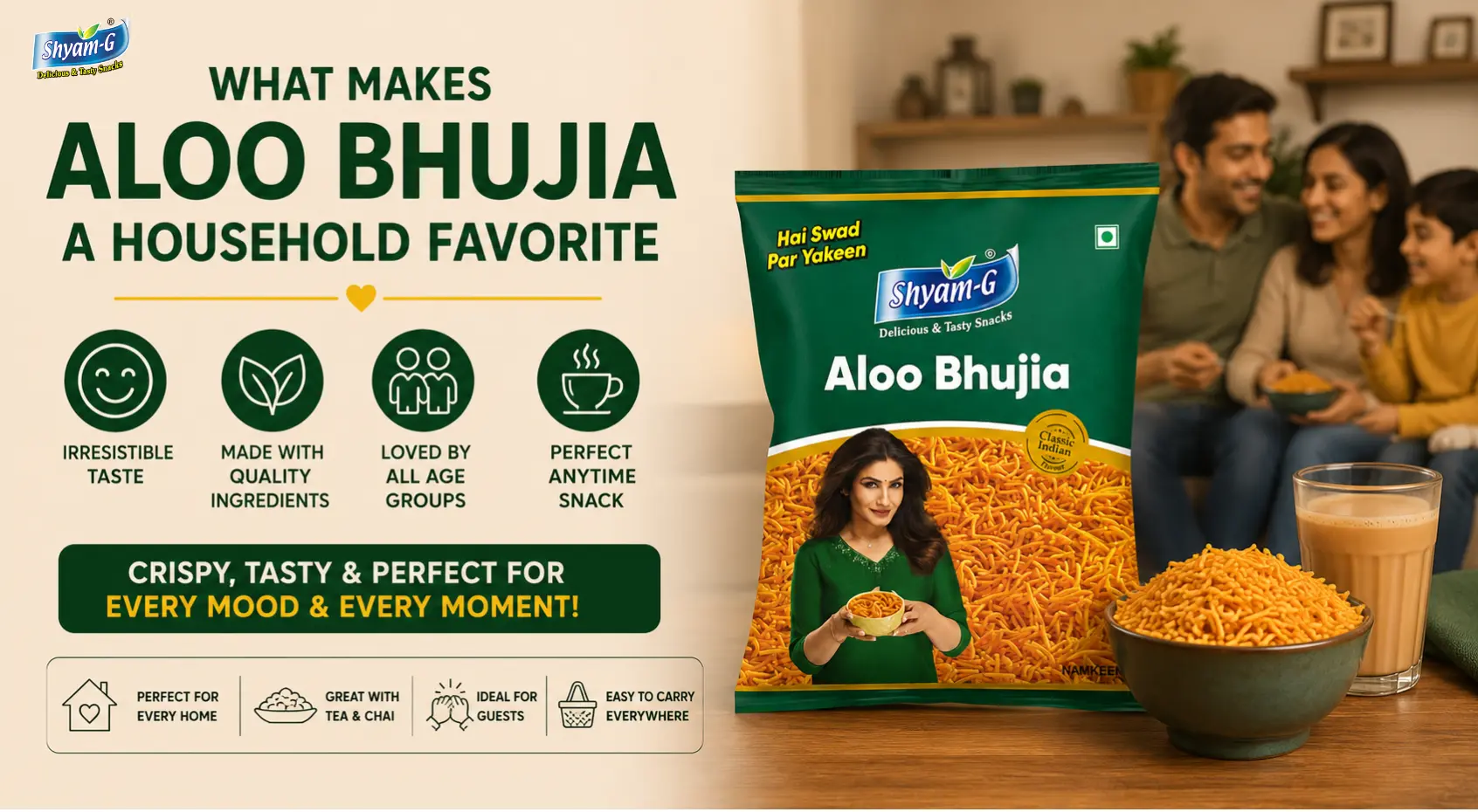
Aloo Bhujia: The Real Reason It Has Been Every Indian Home's Favorite Namkeen for Decades
Ask anyone in India what snack they grew up eating and there is a very good chance aloo bhujia comes up in the first three answers. It sits in almost every Indian kitchen. It travels in every holiday bag. It shows up on every thali spread during festivals. And it gets finished before any other snack on the table. There is something about aloo bhujia that goes beyond just taste. It is familiar. It is comforting. It is the kind of snack that feels right at any time of day, whether you are having it with your morning chai, eating it as a quick evening snack, or sprinkling it on your poha or chaat.
For anyone who has grown up in India, this namkeen is not just a snack. It is a memory. And for anyone discovering it for the first time, it is the kind of thing that becomes a habit after just one packet. This article explains exactly what makes aloo bhujia so special, what goes into a good one, how it differs from similar snacks, and what to look for when you are buying the best namkeen in india for your home or for gifting.
What Is Aloo Bhujia and Where Did It Come From
Aloo bhujia is a thin, crispy, deep fried snack made primarily from potato and besan, which is chickpea flour. The word aloo means potato in Hindi, and bhujia refers to the thin, noodle like shape that is formed when the mixture is pressed through a special mould and fried. The origins of bhujia as a snack category trace back to Bikaner in Rajasthan, where namkeen making has been a tradition for well over a century. Over time, the aloo variant became one of the most widely produced and consumed versions across North India.
What makes the Bikaneri tradition of namkeen making special is the use of specific spice combinations and the technique of getting that distinct thin, crunchy texture that breaks cleanly without being too hard or too soft. This is not something that happens by accident. It takes the right ratio of ingredients and consistent frying temperature to get it right every time. Today, aloo bhujia is made by hundreds of manufacturers across India, from large national brands to regional producers who supply local markets. But the best versions still follow the traditional principles of ingredient quality and careful frying.
Why Aloo Bhujia Is So Popular Across India
There are snacks that sell well because they are trendy. And then there are snacks that sell because they have genuinely earned their place in people's daily lives. Aloo bhujia belongs firmly in the second category.
It Works With Everything
One of the biggest reasons for its popularity is how versatile it is. You can eat it straight from the packet as a standalone snack. You can add it on top of poha, upma, or dahi for that extra crunch. You can mix it into chaat. You can even eat it as a side with roti and sabzi when you want something crunchy on the plate. No other desi namkeen snack india offers this kind of flexibility across so many eating occasions.
It Is Available Everywhere
From a small paan shop in a village to a supermarket in a metro city, aloo bhujia is stocked almost universally. It is one of the most popular packaged snacks in india and has been for decades. This ubiquity means people grow up finding it everywhere they go, which naturally builds a habit.
It Is Genuinely Affordable
A good quality aloo bhujia packet is available at very accessible price points. It is one of the best examples of affordable snacks in india that does not compromise on taste or quality. A small Rs 10 pack delivers real satisfaction and that is a combination not many snacks can match.
The Taste Profile Is Perfectly Balanced
Good aloo bhujia hits the right balance of spicy, savory, and slightly tangy all at once. It is spicy enough to be interesting but not so hot that it becomes uncomfortable. This balanced taste profile is why it appeals to such a wide range of people, from children to elderly family members.
Aloo Bhujia vs Bhujia Sev: What Is the Difference
This is one of the most common questions people have when they first start exploring the namkeen category. Both look similar. Both are thin and crispy. But they are different products. Aloo bhujia is made with a combination of potato and besan. The potato gives it a slightly softer bite and a more rounded, earthy flavor that carries the spices very well. It also tends to have a slightly thicker texture compared to plain sev. Bhujia sev is made primarily from besan without potato.
It tends to be thinner, slightly more brittle, and has a sharper, more pronounced besan flavor. It is also used widely as a topping in chaat and bhel puri. The spice profile is different too. Aloo bhujia tends to carry more complex spicing including black pepper, sendha namak, and chaat masala notes, while plain bhujia sev is often simpler and milder. Both are excellent snacks. But if you are looking for something to eat on its own as a standalone spicy namkeen, most people prefer aloo bhujia for its more satisfying and rounded taste.
What Makes a Good Aloo Bhujia: What to Look For
Not all aloo bhujia is equal. The difference between a good packet and an average one is very noticeable once you know what to look for.
- Texture: A properly made aloo bhujia should be uniformly thin and crispy throughout the packet. There should be no soggy or soft pieces. The crunch should be consistent and the strands should be roughly similar in thickness. Uneven frying or poor oil management leads to inconsistent texture.
- Spice Balance: The spice should be present but not overwhelming. You should be able to taste the potato and besan base even through the seasoning. If the spice completely masks everything else, that is a sign of either low quality base ingredients or over seasoning to hide quality gaps.
- Oil Quality: Fresh, well maintained frying oil produces a clean tasting snack that does not leave a heavy or rancid aftertaste. If your aloo bhujia leaves an unpleasant oily feeling or tastes stale despite being within the expiry date, that often points to poor oil quality or management in the snacks factory in india where it was made.
- Freshness: Always check the manufacturing date. A freshly made packet delivers the best crunch and flavor. Aloo bhujia that has been sitting in a warehouse for months will always disappoint compared to a fresh batch.
How to Use Aloo Bhujia Beyond Just Snacking
Most people eat it straight from the packet and that is absolutely fine. But there are so many other ways to use it that many people never try.
- As a Chaat Topping: Sprinkle it generously over any chaat, whether it is aloo chaat, dahi papdi chaat, or sev puri. It adds a spicy crunch that holds up better than regular sev in many applications.
- Mixed With Other Namkeen as Chakhna: Combine aloo bhujia with roasted peanuts, moong dal namkeen, and some roasted chana to make your own custom chakhna mix. This works brilliantly for evening snacking or during cricket match watching sessions.
- On Top of Poha or Upma: A handful of aloo bhujia sprinkled on hot poha or upma right before eating adds the perfect textural contrast to a soft dish. It is a small addition that makes a big difference to the eating experience.
- In Sandwiches and Rolls: Putting a layer of aloo bhujia inside a veg sandwich or a kathi roll before closing it adds an unexpected crunch that works very well, especially with chutney or mayonnaise.
Finding the Best Aloo Bhujia Brand India: What to Consider
With so many brands making aloo bhujia, choosing the best one can feel overwhelming. Here is a simple way to think about it. Look for brands that list their ingredients clearly and use quality oil and fresh spices. Check that the packaging is properly sealed and that the product is FSSAI certified. Regional brands that specialize in traditional namkeen often produce better aloo bhujia than large companies that make it as one of hundreds of products.
A focused best namkeen brand india that has built its reputation specifically on namkeen quality tends to put more care into the product. Shyam G Snacks is one such brand that has built its presence in North India on a range of traditional namkeen products including aloo bhujia, made with attention to the spice balance and texture that this category demands. Their products are widely available through local retailers and distributors across Haryana and Punjab. You can also order bhujia namkeen online through grocery delivery apps and ecommerce platforms if your local store does not stock the specific brand you want.
Why Aloo Bhujia Will Always Stay Relevant
Snack trends come and go. Flavoured chips, baked puffs, protein snacks, makhana, the list keeps growing every year. But aloo bhujia has stayed exactly where it is across all of this change. The reason is simple. It does not need a trend to be relevant because it is already embedded in everyday life. It is in the kitchen. It is in the snack drawer. It goes on top of the chaat and inside the thali and into the bag when someone travels. It is not going anywhere because it never left. In the best namkeen in india conversation, aloo bhujia always comes up because it has earned that place not through marketing but through decades of consistent quality and genuine love from the people who eat it.
Wrapping Up
Aloo bhujia is popular not because someone decided to make it popular. It is popular because it genuinely delivers on taste, affordability, and versatility in a way that very few snacks can match. Whether you eat it straight from the packet, mix it into your chaat, or use it as a crunchy topper on your breakfast dish, it always fits. And that is the real secret behind why this simple desi namkeen snack india has remained a household favorite for so many years. If you want to explore more about the world of Indian namkeen and traditional packaged snacks, check out our related article on the most popular snacks in India and what makes them so widely loved.
