
2 days
Why Quality Matters in Snacks Manufacturing Today
Walk into any grocery store in India, and you'll find hundreds of snack options competing for attention. From traditional namkeen and fryums to modern packaged chips, consumers today have more choices than ever before.
In such a competitive market, quality is often the factor that separates successful brands from those that struggle to retain customers. A product may attract a first-time buyer through attractive packaging or marketing, but long-term success depends on consistent quality.
For every namkeen manufacturer India, maintaining high-quality standards is not just about meeting regulations. It is about delivering a product that consumers trust, retailers confidently stock, and distributors willingly promote.
Quality influences every stage of the manufacturing process—from ingredient sourcing and production to packaging and distribution. When managed effectively, it helps businesses reduce complaints, improve customer loyalty, strengthen brand reputation, and achieve sustainable growth.
This article explores why quality matters in snacks manufacturing and how it contributes to long-term success in India's fast-growing snack industry.
What Does Quality Mean in Snacks Manufacturing?
Quality in snacks manufacturing goes far beyond taste.
A quality product should consistently meet expectations related to:
- Taste and flavour
- Texture and crunch
- Freshness
- Food safety
- Packaging integrity
- Shelf life
- Ingredient quality
- Product consistency
Consumers expect the same experience every time they purchase a product. Even small variations can influence how they perceive a brand.
This is why leading manufacturers build quality into every stage of production rather than relying solely on final product inspections.
Why Quality Has Become More Important Than Ever
Rising Consumer Awareness
Today's consumers are more informed than previous generations.
They increasingly pay attention to:
- Ingredient labels
- Manufacturing practices
- Food safety standards
- Product freshness
- Brand credibility
A single negative experience can influence future purchasing decisions and online reviews.
As a result, quality is no longer a competitive advantage alone—it has become a basic expectation.
Intense Market Competition
India's snack industry continues to grow, bringing new regional and national brands into the market.
While pricing remains important, consumers often stay loyal to brands that consistently deliver:
- Better taste
- Reliable quality
- Safe products
- Fresh packaging
Manufacturers that maintain high standards are often better positioned to retain customers in a crowded marketplace.
Quality Builds Consumer Trust
Trust is one of the most valuable assets a food brand can earn.
Consumers rarely know what happens inside a manufacturing facility. Instead, they judge a brand based on the product they receive.
When a snack consistently delivers:
- The same flavour
- The same texture
- The same freshness
customers become confident in the brand.
Over time, this confidence translates into:
- Repeat purchases
- Positive word-of-mouth
- Better brand recognition
- Stronger customer loyalty
In the food industry, trust is built through consistency, and consistency comes from quality management.
Food Safety: The Foundation of Quality
Food safety is one of the most critical aspects of snacks manufacturing.
Quality systems help manufacturers identify and control potential risks before products reach consumers.
Important food safety measures include:
- Raw material inspection
- Hygiene monitoring
- Controlled production environments
- Equipment sanitation
- Packaging protection
- Storage management
Manufacturers must also comply with standards established by the Food Safety and Standards Authority of India.
Food safety failures can damage brand reputation and consumer confidence. Strong quality systems help prevent these issues before they occur.
Key Quality Checks in Modern Snack Manufacturing
One area often overlooked in discussions about snack quality is the role of systematic quality control.
Leading manufacturers typically implement checks throughout production rather than only testing finished products.
Raw Material Testing
Quality begins with ingredients.
Manufacturers evaluate:
- Freshness
- Supplier reliability
- Ingredient specifications
- Storage conditions
Poor-quality raw materials can affect the final product regardless of manufacturing efficiency.
Moisture Control
Excess moisture can affect:
- Crispness
- Shelf stability
- Product freshness
Proper moisture management is essential for maintaining the desired texture.
Metal Detection and Safety Screening
Modern manufacturing facilities often use detection systems to identify potential foreign particles before products are packaged.
These systems help improve food safety and consumer confidence.
Packaging Inspection
Even high-quality snacks can lose freshness if packaging fails.
Manufacturers monitor:
- Seal integrity
- Packaging strength
- Label accuracy
- Storage compatibility
Packaging quality is often just as important as product quality.
How Automation Supports Better Quality
An automated snacks manufacturing plant India can significantly improve quality management.
Automation helps manufacturers achieve:
Greater Consistency
Machines follow standardized processes, reducing batch-to-batch variation.
Improved Accuracy
Automated systems can maintain precise production parameters for:
- Mixing
- Frying
- Seasoning
- Packaging
Reduced Contamination Risk
Minimizing unnecessary product handling can support better hygiene and food safety outcomes.
Automation does not replace quality management, but it strengthens a manufacturer's ability to deliver consistent results.
The Importance of Hygiene Standards
Consumers may never see a manufacturing facility, but hygiene standards influence every product they consume.
A hygienic snacks manufacturer India typically focuses on:
- Clean production environments
- Employee hygiene protocols
- Equipment sanitation schedules
- Pest control programs
- Safe ingredient handling practices
Strong hygiene practices help maintain product safety and freshness while reducing contamination risks.
Why Certifications Matter
Industry certifications demonstrate a structured approach to quality management.
An ISO certified snacks manufacturer India generally follows documented systems designed to improve consistency and operational control.
Benefits include:
- Better process management
- Enhanced traceability
- Improved quality documentation
- Greater stakeholder confidence
While certifications alone do not guarantee excellence, they often indicate a strong commitment to quality and continuous improvement.
What Retailers and Distributors Look for in a Quality Manufacturer
Quality is important not only for consumers but also for supply chain partners.
Retailers and distributors often prefer working with manufacturers that provide:
- Consistent product quality
- Reliable supply schedules
- Strong packaging standards
- Stable shelf life performance
- Responsive quality management systems
A reliable food manufacturer India understands that maintaining quality helps build stronger relationships throughout the distribution network.
A Practical Industry Perspective
Within the snack industry, many product complaints are not caused by flavour issues alone.
Common challenges often include:
- Poor packaging seals
- Inconsistent seasoning
- Storage-related freshness problems
- Variations between production batches
Manufacturers that proactively address these areas often experience fewer complaints and stronger customer retention.
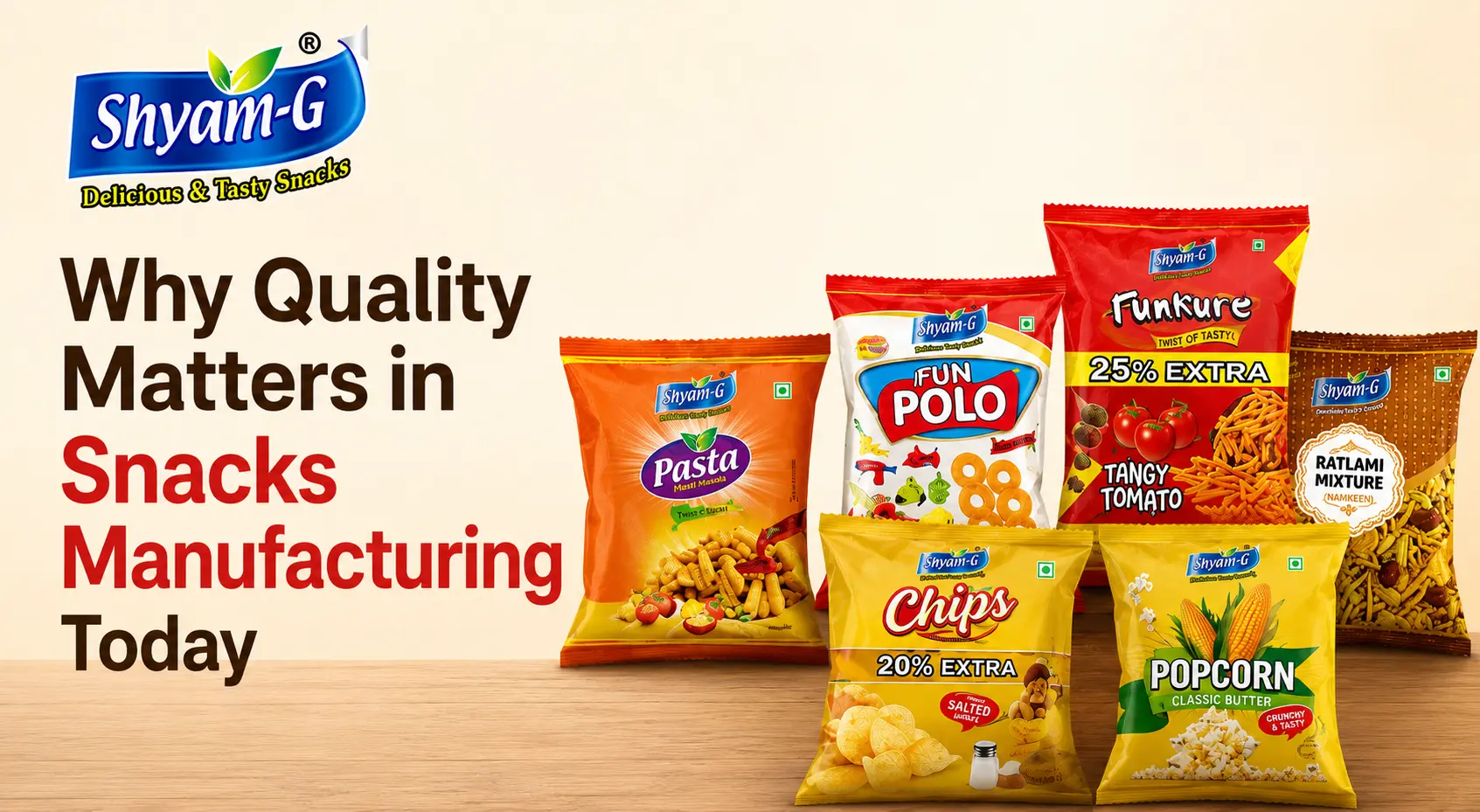
Growing brands such as Shyam-G Snacks reflect the broader industry trend toward prioritizing quality, consistency, and manufacturing excellence as key drivers of long-term growth.
Conclusion
Quality is far more than a manufacturing requirement—it is the foundation of sustainable success in the snack industry.
From food safety and hygiene to automation, packaging, and consistency, quality influences every aspect of a product's journey from factory to consumer.
For manufacturers, distributors, retailers, and emerging brands, investing in quality helps build trust, reduce operational risks, strengthen market reputation, and support long-term growth.
As consumer expectations continue to rise, businesses that prioritize quality will be better positioned to thrive in India's competitive snacks market.
Learn More
Interested in learning more about snack manufacturing standards, food safety practices, and industry trends? Explore our related resources to understand how quality-driven manufacturing supports long-term success in the Indian snacks market.
