
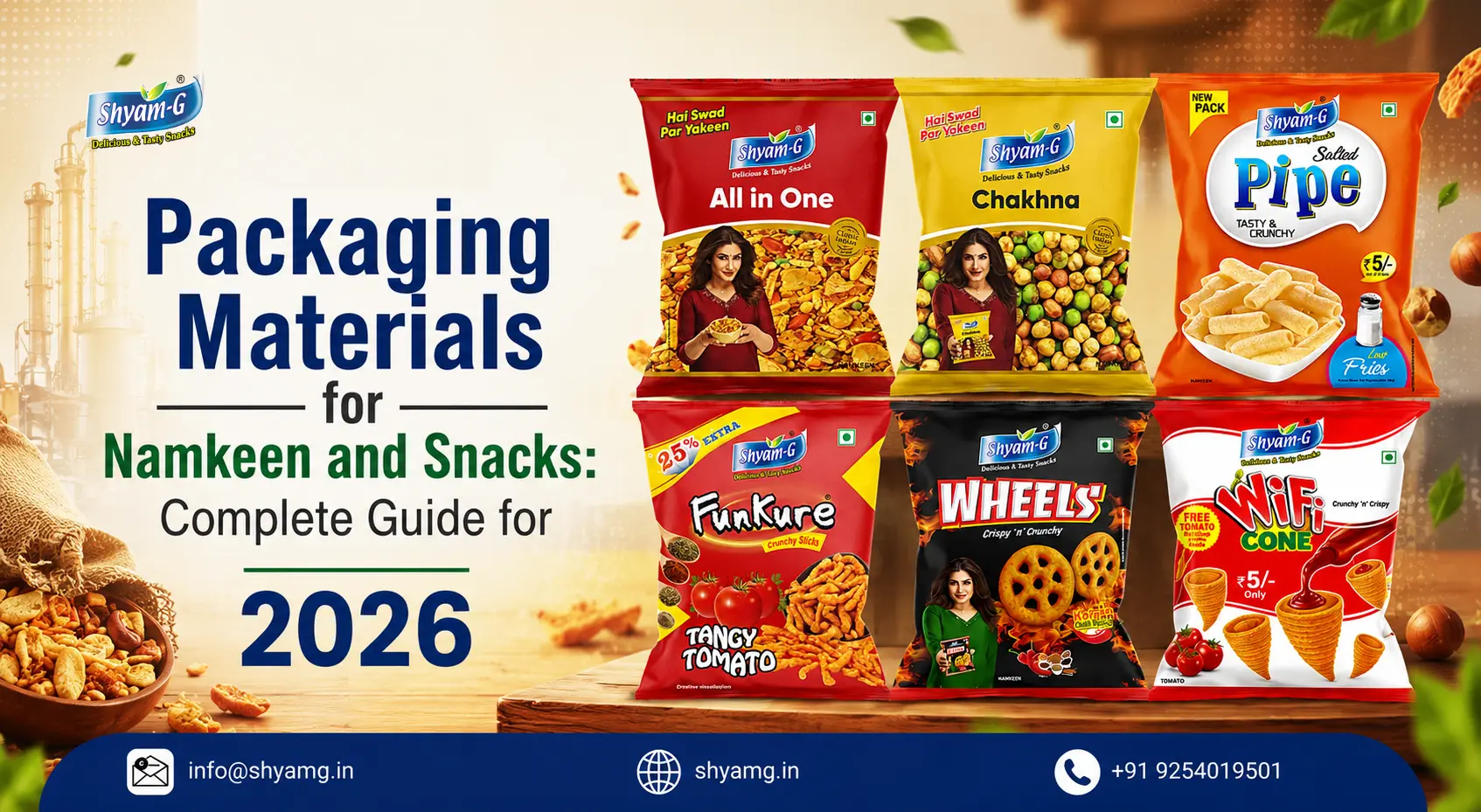
Packaging Materials for Namkeen and Snacks: Complete Guide for 2026
The quality of a snack does not depend only on its taste. The right packaging also plays a major role in protecting freshness, maintaining crispness, and creating a good first impression. Whether you manufacture namkeen, chips, popcorn, fryums, or other ready to eat products, choosing the right Packaging Materials for Namkeen and Snacks is essential for maintaining product quality throughout storage and transportation.
Good packaging protects snacks from moisture, oxygen, dust, sunlight, and physical damage. It also helps manufacturers meet food safety requirements while giving customers important information through product labels.
In this guide, you will learn about the most commonly used packaging materials, how they affect shelf life, and how to select the right packaging solution for different types of snack products.
Why Packaging Is Important for Namkeen and Snacks
Packaging does much more than hold the product.
It helps manufacturers:
- Maintain freshness.
- Protect crispness.
- Increase shelf life.
- Prevent contamination.
- Improve product appearance.
- Build customer trust.
- Reduce product damage during transportation.
For every snacks manufacturer India, selecting suitable packaging is as important as choosing quality ingredients.
Factors to Consider Before Choosing Packaging Materials
Every snack product has different packaging requirements. Before selecting any packaging material, manufacturers should evaluate several important factors.
These include:
- Product type
- Moisture sensitivity
- Oil content
- Shelf life
- Transportation distance
- Storage conditions
- Packaging cost
- Branding requirements
- Food safety compliance
Choosing packaging without considering these factors may reduce product quality before it reaches consumers.
Common Packaging Materials Used for Snacks
Different products require different packaging materials. Manufacturers usually select packaging based on product characteristics and expected shelf life.
Polypropylene Packaging
Polypropylene is one of the most widely used packaging materials for packaged snacks.
It offers:
- Good moisture resistance.
- Lightweight construction.
- Attractive printing quality.
- Cost effectiveness.
It is commonly used for namkeen, chips, popcorn, and fryums.
Metallised Film Packaging
Metallised films provide better protection against moisture, oxygen, and light.
This type of packaging is commonly selected for products that require a longer shelf life while maintaining freshness.
Many premium snack products use metallised laminated pouches because they provide improved barrier protection.
Multi Layer Laminated Packaging
Laminated packaging combines multiple layers of materials to improve product protection.
Benefits include:
- Better barrier properties.
- Improved durability.
- Longer shelf life.
- Better print quality.
- Protection during transportation.
Many packaged snacks India brands use laminated packaging for retail products.
Stand Up Pouches
Stand up pouches have become increasingly popular because they improve product visibility on retail shelves.
Advantages include:
- Easy storage.
- Attractive appearance.
- Better branding space.
- Convenient handling.
They are widely used for premium snack products.
Pillow Pouches
Pillow pouches remain one of the most common packaging formats in the snack industry.
They are suitable for:
- Namkeen
- Potato chips
- Popcorn
- Fryums
- Corn snacks
They offer an economical solution for large scale production.
How Packaging Affects Shelf Life
Shelf life depends on several factors, and packaging is one of the most important.
Good packaging helps:
- Reduce moisture absorption.
- Prevent oxidation.
- Preserve flavour.
- Maintain crispness.
- Protect against contamination.
Using unsuitable packaging may result in stale products even when high quality ingredients are used.
Manufacturers that follow recognised food safety practices can also benefit from reading our guide on ISO Certified Snacks Manufacturer India, which explains how quality management systems help improve product consistency alongside effective packaging.
Food Safety and Packaging Compliance
Food packaging should not only protect the product but also comply with applicable food safety requirements.
Manufacturers should always follow the latest packaging and labelling requirements published by the Food Safety and Standards Authority of India (FSSAI) while selecting food contact materials and preparing product labels.
Proper compliance helps manufacturers protect consumers while maintaining regulatory standards.
Choosing the Right Packaging for Different Snack Categories
Not every snack needs the same type of packaging. The right material depends on the product's texture, oil content, moisture level, and expected shelf life.
Choosing suitable packaging helps manufacturers reduce product damage and maintain consistent quality.
Namkeen Packaging
Namkeen products usually contain oil and spices, making them sensitive to moisture and air.
Manufacturers generally prefer laminated pouches with good moisture and oxygen barrier properties because they help preserve freshness for a longer period.
Potato Chips Packaging
Potato chips are fragile and can easily break during transportation.
Manufacturers often use metallised laminated pouches filled with food grade nitrogen to help protect the chips from oxidation and physical damage while maintaining crispness.
Popcorn Packaging
Ready to eat popcorn requires packaging that helps maintain flavour and crunch.
Depending on the product type and shelf life requirements, manufacturers commonly use laminated pouches or stand up pouches with strong barrier protection.
Businesses interested in developing customised popcorn products can also read our guide on OEM Snacks Manufacturing in India to understand how manufacturers create products based on brand specific requirements.
Fryums Packaging
Ready to eat fryums and ready to fry fryums have different packaging needs.
Ready to eat products require packaging that protects against moisture, while ready to fry products require durable packaging that prevents breakage during storage and transportation.
Premium Gift Packs
Premium snack collections often use rigid boxes, zipper pouches, or stand up pouches to improve presentation while protecting product quality.
These packaging formats also provide more space for branding and product information.
How to Select the Best Packaging Material
Selecting packaging only because it is inexpensive may increase product losses later.
Before making a decision, manufacturers should evaluate:
- Shelf life requirements
- Product freshness
- Packaging strength
- Printing quality
- Storage conditions
- Transportation distance
- Cost efficiency
- Customer convenience
- Environmental impact
Businesses planning to launch a new snack brand can also read our guide on Private Label Snacks Manufacturing in India to understand how packaging decisions are made during product development.
Sustainable Packaging Trends in 2026
Sustainability has become an important consideration across the food industry.
Many manufacturers are exploring packaging solutions that reduce material usage while maintaining food safety and product protection.
Some common trends include:
- Lightweight packaging
- Recyclable packaging where suitable
- Reduced plastic consumption
- Better packaging design to minimise waste
- Improved packaging efficiency
Manufacturers should ensure that any new packaging solution continues to meet food safety and quality requirements.
Quality Testing of Packaging Materials
Before using any packaging material in production, manufacturers should evaluate its performance.
Common quality checks include:
Seal Strength
Strong seals help prevent leakage and moisture entry.
Barrier Performance
Packaging should provide suitable protection against oxygen, moisture, and external contaminants.
Drop Testing
Drop tests help determine whether packaged products can withstand normal handling during transportation.
Print Quality
Labels should remain clear and readable throughout the product's shelf life.
Food Contact Safety
Food contact materials should comply with applicable safety requirements before being used in commercial production.
Manufacturers should also review the relevant guidance issued by the Bureau of Indian Standards when evaluating packaging quality practices and material specifications applicable to food packaging.
Common Packaging Mistakes Manufacturers Should Avoid
Even high quality snacks can lose their value if the packaging is not suitable.
Some common mistakes include:
- Choosing packaging based only on price.
- Ignoring shelf life requirements.
- Using weak sealing methods.
- Poor storage before filling.
- Incorrect label placement.
- Inadequate transportation protection.
- Not testing packaging before large scale production.
Avoiding these mistakes helps reduce product returns and improves customer satisfaction.
Packaging and Brand Value
Packaging is often the first thing customers notice.
Good packaging helps:
- Build trust.
- Improve shelf visibility.
- Support repeat purchases.
- Protect product quality.
- Strengthen brand recognition.
Many leading top snacks manufacturers in india invest in packaging improvements because customers often judge product quality by its overall presentation before making a purchase.
Food Safety Requirements for Packaging
Packaging should protect the product throughout its shelf life while meeting applicable food safety requirements.
Manufacturers should regularly review the latest food packaging guidance published by the Food Safety and Standards Authority of India (FSSAI) to ensure that packaging materials, labelling, and food contact practices remain compliant.
Businesses that want to understand these compliance requirements in greater detail can also read our guide on FSSAI Rules for Snacks Manufacturers in India.
Future Trends in Snack Packaging for 2026
The snack industry continues to evolve as manufacturers focus on improving product quality, reducing waste, and enhancing customer convenience. Packaging is no longer limited to protecting the product. It has become an important part of product quality, branding, and customer experience.
Some of the packaging trends gaining attention in 2026 include:
- Resealable pouches for better freshness after opening.
- Lightweight packaging to reduce transportation costs.
- Improved barrier films for longer shelf life.
- Better print quality for stronger brand visibility.
- Smart packaging solutions that improve product traceability.
- Packaging designs that use material more efficiently without affecting product protection.
Businesses planning new product launches should choose packaging that meets both current market expectations and long term business goals
Expert Tips for Choosing the Right Packaging
Selecting the right packaging requires careful planning.
Keep these recommendations in mind before making a final decision.
- Choose packaging based on the product, not only the price.
- Test packaging before commercial production.
- Select materials that protect freshness throughout the shelf life.
- Ensure packaging can withstand transportation.
- Verify that labels meet applicable regulatory requirements.
- Work with experienced packaging suppliers.
- Review packaging performance regularly based on customer feedback.
Businesses looking for a reliable production partner should also read our guide on How to Choose the Right Snacks Manufacturing Company in India before selecting a manufacturer.
Packaging Buying Checklist
Before placing a bulk packaging order, confirm the following.
✔ Product type
✔ Shelf life requirement
✔ Moisture protection
✔ Oxygen barrier
✔ Packaging strength
✔ Seal quality
✔ Printing quality
✔ Storage conditions
✔ Transportation requirements
✔ Compliance with food safety regulations
This checklist helps manufacturers reduce packaging related issues and improve overall product quality.
Common Questions to Ask Your Packaging Supplier
Before finalising any packaging material, ask your supplier these questions.
- Is this material suitable for my snack category?
- What shelf life can this packaging support?
- Can the packaging protect against moisture and oxygen?
- Is the material suitable for high speed packing machines?
- Can custom printing be provided?
- What quality tests are performed before supply?
- What is the minimum order quantity?
- Can sample packaging be provided before bulk production?
These questions help businesses make better purchasing decisions and reduce future packaging problems.
Conclusion
Choosing the right Packaging Materials for Namkeen and Snacks is one of the most important decisions for any snack business. Good packaging protects product quality, improves shelf life, supports food safety, and creates a positive first impression for customers.
The ideal packaging solution depends on the type of snack, storage conditions, transportation requirements, and expected shelf life. Manufacturers should evaluate packaging materials carefully instead of selecting them only because they are inexpensive.
If you are planning to launch a new snack brand or expand your product range, working with experienced manufacturers and packaging partners can help you deliver consistent quality while meeting customer expectations.
Businesses interested in customised manufacturing solutions can also explore our guides on Contract Manufacturing for Snacks in India and OEM Snacks Manufacturing in India to understand which manufacturing model best suits their business requirements.
Choosing the right packaging is just one part of building a successful snack brand. Equally important is working with a manufacturer that understands product quality, food safety, and market requirements. Shyam G Snacks offers Contract Manufacturing, Private Label Manufacturing, and OEM Manufacturing for a wide range of packaged snacks. If you are looking for dependable manufacturing support and quality focused production, get in touch with our team to discuss your business requirements.
